

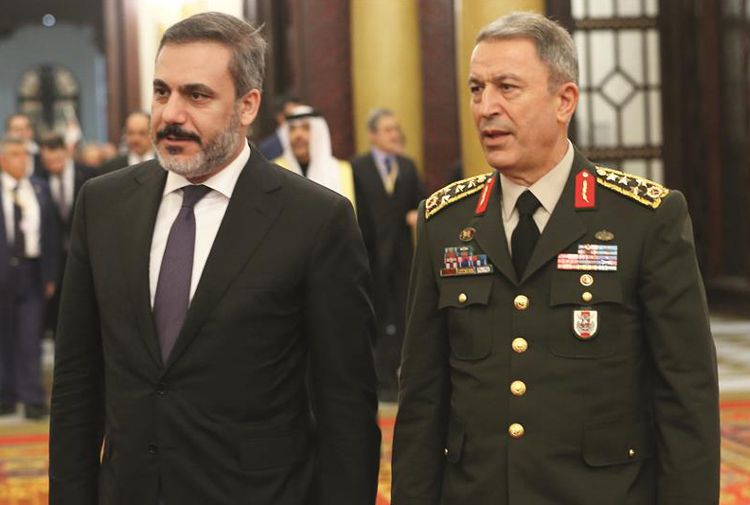
Journalist Adem Yavuz Arslan has claimed that two witnesses provided new details about events he says formed part of the preparation for Turkey’s July 15, 2016 coup attempt, including alleged arms movements through Qatar and Syria and private meetings between then-intelligence chief Hakan Fidan and then-chief of General Staff Hulusi Akar at a National Intelligence Organization facility in Ankara.
Arslan made the claims in a February 2024 video on his YouTube channel, saying the accounts helped fill gaps in what he described as the “kitchen” of the July 15 process.
His allegations have not been tested in an independent judicial investigation.
The first account concerned Chinese-made FN-6 shoulder-fired anti-aircraft systems, which Arslan said were not in the Turkish military’s NATO inventory.
Arslan alleged that the weapons were purchased from Qatar before the coup attempt, flown into Turkey and later transported by road into rural Syria, where they were given to the Islamic State in Iraq and the Levant and other jihadist groups.
He further claimed that some of the same weapons were used around the presidential palace grounds in Ankara on the night of July 15.
According to Arslan, one witness described the purchase, transport and training process and confirmed details he had presented in an earlier video.
Arslan said more than 100 of the FN-6 systems were brought into Turkey and that National Intelligence Organization personnel were trained on them at the agency’s Ankara Çamlıdere facility before the coup attempt.
He claimed the training was organized under Kemal Eskintan, a senior intelligence figure, and that the weapons were intended for use against helicopters.
The second account concerned alleged meetings between Fidan and Akar at the intelligence agency’s Çiftlik base in Ankara before July 15.
Arslan said he had spoken to a National Intelligence Organization employee who had been present at the facility and described unusual private meetings between the two men.
According to the account cited by Arslan, Fidan and Akar met in a secluded open-air area near a Turkmen tent inside the compound, sitting at a table with two chairs away from staff, phones and bodyguards.
The witness said the meetings were held in a way that prevented electronic monitoring or casual observation, sometimes in windy weather and with no one allowed nearby, Arslan claimed.
Arslan linked those alleged meetings to previously reported contacts involving Fidan, Akar, Yaşar Güler and Zekai Aksakallı in the days before the coup attempt, including known meetings at the Special Forces Command on July 14.
He argued that the Çiftlik meetings suggested that planning was not limited to the July 14 Special Forces contacts.
Arslan also said the witness described President Recep Tayyip Erdoğan’s visits to the Çiftlik base, claiming a special asphalt road was built for him, special protocol arrangements were made and gold-rimmed plates were purchased for his visits.
He presented those details as evidence that the facility was used for high-level meetings before July 15, not merely routine intelligence work.
The claims fit into Arslan’s broader argument that Turkey’s 2016 coup attempt was not an ordinary failed military takeover but a controlled operation used to reshape the state, purge opponents and consolidate Erdoğan’s executive rule.
He cited Islamist writer Abdurrahman Dilipak’s claim that the government knew about the coup attempt months in advance, but said he believed the preparation went back further than Dilipak suggested.
Arslan argued that the official account leaves major questions unanswered, including why senior officials did not stop the events after receiving warnings, why critical witnesses were not questioned by parliament or courts and why key commanders were later promoted.
Ankara’s official narrative blames the coup attempt on the Gülen movement, a transnational civic initiative inspired by Islamic scholar Fethullah Gülen. The movement denies involvement in the coup or any terrorist activity.
The video’s significance lies in the specificity of the claims: Arslan says witnesses described not only general suspicions about pre-coup preparations but concrete locations, personnel, weapons movements and meeting arrangements.
The allegations also touch on two unresolved areas in the public record: the role of the intelligence agency before July 15 and the movement of non-standard weapons allegedly used or staged around key locations that night.