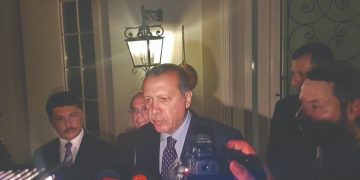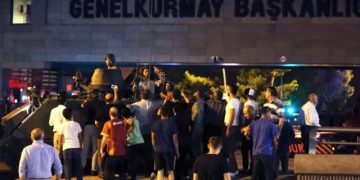


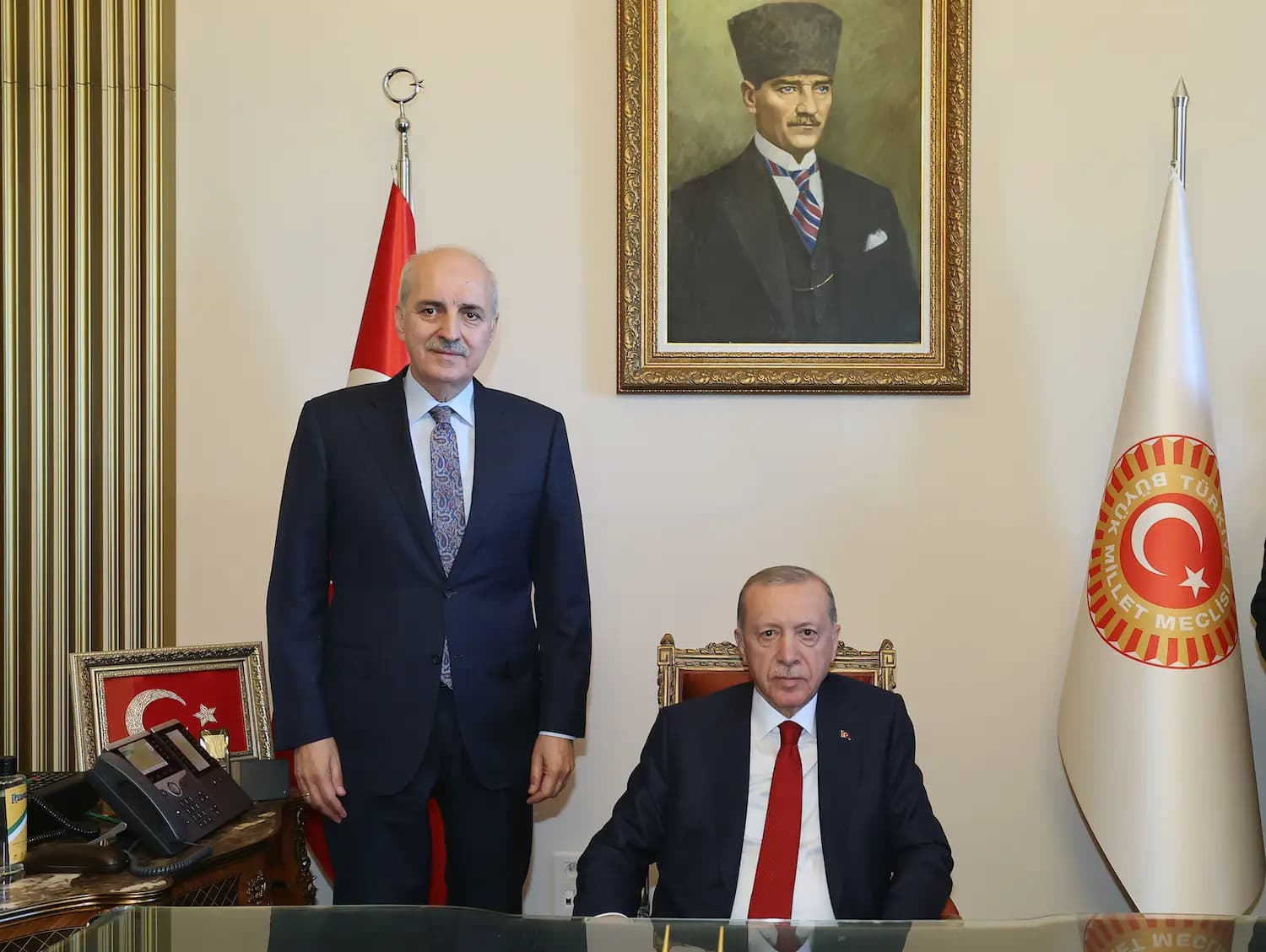
Numan Kurtulmuş, who was deputy prime minister during Turkey’s July 15, 2016 coup attempt and is now speaker of the Turkish parliament, defended mass dismissals carried out by emergency decree-laws after the failed putsch, saying the state used extraordinary measures because ordinary procedures would have taken years.
Kurtulmuş made the remarks in a 2019 interview with journalist Hadi Özışık on İnternethaber, during a discussion of the grievances of people dismissed by emergency decrees, known in Turkey as KHKs. İnternethaber reported that Özışık asked Kurtulmuş about possible steps for those who said they had been wrongfully purged.
“If we had tried to dismiss them through normal procedures after July 15, we would not have been able to remove them from civil service until 2020 or 2030,” Kurtulmuş said, according to a TR724 report that cited the video. “The state took such an urgent, extraordinary measure to protect itself.”
The statement has drawn renewed attention because it appears to acknowledge the core criticism of the post-coup purge: that the government bypassed ordinary legal and administrative safeguards in order to remove large numbers of public employees quickly.
Kurtulmuş described the measures as a “state reflex,” arguing that they could not be discussed as an ordinary political issue or separately from the coup attempt. İnternethaber quoted him as saying the state took the measures to protect itself from those he accused of trying to overthrow it.
In the same interview, Kurtulmuş also said an acquittal in criminal proceedings did not necessarily remove an allegation of organizational affiliation, a remark critics said reflected the government’s willingness to treat dismissed public servants as permanently suspect even when courts did not convict them.
Turkey declared a state of emergency on July 20, 2016, five days after the coup attempt, and ruled under emergency decree-laws for two years.
Nearly 130,000 public-sector workers were dismissed by executive decrees, according to Amnesty International, which described the dismissals as arbitrary and said many people were permanently barred from public service or their professions on the basis of activities that had been lawful at the time.
The purge affected judges, prosecutors, police officers, teachers, academics, soldiers, doctors and other public employees.
The Venice Commission, the Council of Europe’s constitutional law advisory body, said Turkey had implemented emergency powers through ad hominem legislation, with tens of thousands of public servants dismissed through lists attached to decree-laws. It said those collective dismissals did not refer to verifiable evidence in each individual case.
Human Rights Watch warned in 2016 that emergency decrees allowed dismissals without investigation, property confiscations without judicial review and prolonged police custody, raising the risk of abuse.
Kurtulmuş’s remarks are significant because they frame the purge not as a series of individualized disciplinary or criminal proceedings but as an emergency administrative operation designed to remove people rapidly.
That is precisely the point raised for years by dismissed public servants and rights advocates, who say they were punished by executive lists without a proper defense, evidence review or court judgment.
Ankara blames the coup attempt on the Gülen movement, a transnational civic initiative inspired by Islamic scholar Fethullah Gülen, and designates the movement as a terrorist organization. The movement denies involvement in the coup or any terrorist activity.
Many people dismissed under the decrees were accused of links to the movement through broad criteria such as alleged affiliation, contact or connection. Critics say those categories were used to punish people for bank accounts, union membership, school enrollment, newspaper subscriptions, workplace records, social ties or intelligence profiling rather than proven wrongdoing.
The Turkish government later established the State of Emergency Inquiry Commission to review purge measures, but Amnesty International said in 2018 that the review body had failed to meet international standards and functioned as a de facto rubber stamp for flawed dismissal decisions.
For purge victims, Kurtulmuş’s comments have remained important because they undercut the government’s claim that the dismissals were ordinary lawful measures against individually proven wrongdoing.
His words instead point to an explicit choice: the state used emergency powers because ordinary law would not have allowed the same speed or scale of removal.