

Advocates of Silenced Turkey, a human rights organization documenting abuses in Turkey, has named public officials it says were involved in torture, protected alleged torturers or helped cover up abuse after Turkey’s July 15, 2016 coup attempt.
The organization’s Torturers Report series is based on victim statements, witness accounts, court records, medical reports, criminal complaints and media reports, according to AST. The group says many of the torture accounts it cites were not merely private allegations but appeared in official court documents.
The reports list people from several branches of the state, including military officers, police chiefs, police officers, prison officials and members of the judiciary.
A June 2022 article by Doğru Açı, citing AST’s reports, said the organization had identified 108 people in reports published in November 2020 and June 2022. The article said the names included generals, officers, noncommissioned officers, police chiefs, prison guards and judges and prosecutors accused of ignoring, concealing or enabling torture.
AST says its aim is to create a record that can later be used in independent legal proceedings. The group says the reports cover not only people accused of directly committing torture but also officials who allegedly encouraged abuse, praised it, failed to investigate it or protected those responsible through abuse of office.
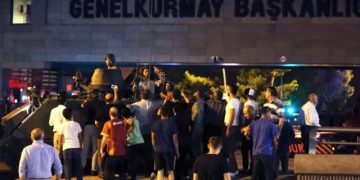
The reports focus heavily on the period after the coup attempt, when Turkey detained tens of thousands of people in military, police, judicial and civil-service purges.
Ankara designates the Gülen movement, a transnational civic initiative inspired by Islamic scholar Fethullah Gülen, as a terrorist organization and blames it for Turkey’s 2016 coup attempt. The movement denies involvement in the coup or any terrorist activity.
Many post-coup detainees accused of links to the movement later alleged they were beaten, threatened, sexually assaulted, deprived of sleep or forced to sign statements.
AST’s first report said torture in Turkey increased significantly after July 15 and became systematic again, while alleged perpetrators were often shielded by impunity. The report said some officials accused or even convicted in torture-related cases remained in public service or received promotions.
The allegations are not limited to AST. Human Rights Watch said in 2016 that emergency decrees adopted after the coup attempt weakened safeguards against torture, including restrictions on access to lawyers and prolonged police custody. Amnesty International also said it had gathered credible evidence of detainees being beaten and tortured, including allegations of rape, in official and unofficial detention sites after the coup attempt.
The Turkish government has denied that torture is systematic and has often dismissed post-coup torture reports as politically motivated. Amnesty’s 2016-2017 country report said Turkish authorities professed a “zero tolerance” policy but sometimes summarily rejected allegations and accused rights groups of serving the government’s coup narrative enemies.
AST argues that the central problem is impunity.
The organization says prosecutors and courts have failed to investigate many allegations properly, while official records, witness testimony and medical findings have not led to accountability.
The reports present the named officials as alleged perpetrators or enablers of torture, not as people convicted in independent proceedings.
Their significance lies in the record they compile: AST is attempting to preserve names, incidents and documents for future investigations into torture and ill-treatment in Turkey’s post-coup crackdown.
İşkence raporlarında Türkiye'den ifşa edilen isimler
Listede generaller, emniyet müdürleri hatta hakim ve savcılar bulunmakta. pic.twitter.com/l9kjPvuewJ
— 15 Temmuz Gerçekleri (@15TemGercekleri) June 12, 2026