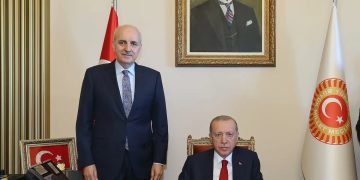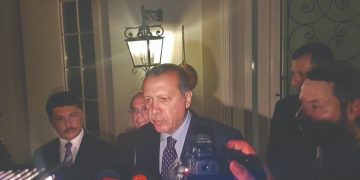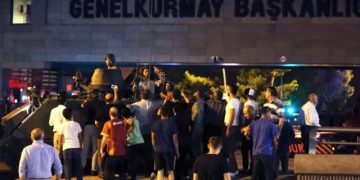



A June 17, 2017 paper titled Gerçeğin Peşinde: 15 Temmuz 2016 argues that Turkey’s July 15, 2016 coup attempt was allowed, manipulated and then used by President Recep Tayyip Erdoğan to consolidate power under emergency rule.
The paper was prepared by former state officials who said they were serving abroad on the night of July 15 and were later dismissed without being given a reason or a chance to defend themselves.
The authors say they oppose any military coup or intervention, but argue that the official account of July 15 leaves major questions unanswered.
The paper describes the post-coup state of emergency, declared on July 20, 2016, as the real turning point. It says emergency decrees gave Erdoğan and the Justice and Development Party government the power to rule without ordinary checks, dismiss public employees, close media outlets and reshape state institutions.
According to the paper, more than 138,000 public employees had been dismissed by mid-June 2017, more than 106,000 people had been detained and nearly 53,000 had been jailed pending trial.
The authors argue that the coup attempt helped Erdoğan escape political pressure from corruption allegations, weaken the Turkish Armed Forces and push Turkey toward a one-man presidential system.
The paper also says pro-government media and allied commentators had spent months before July 15 warning of an imminent coup by officers accused of links to the Gülen movement, a transnational civic initiative inspired by Islamic scholar Fethullah Gülen.
Ankara designates the Gülen movement as a terrorist organization and blames it for Turkey’s 2016 coup attempt. The movement denies involvement in the coup or any terrorist activity.
The study claims those pre-coup warnings helped create public expectation of a military intervention and prepared the ground for a purge in the armed forces.
It points to columns, headlines and social media posts before July 15 that accused alleged Gülen-linked officers of planning a coup to avoid dismissal at the upcoming Supreme Military Council meeting.
The paper’s central claim is that July 15 functioned as a “self-coup,” or autogolpe, in which Erdoğan allegedly permitted and manipulated a coup attempt against himself in order to justify emergency rule and extend his control.
The authors base their argument on public statements, media reports, indictments, parliamentary records, witness accounts and a timeline of events from the night of July 15.
They also highlight contradictions in the official account, including questions about why senior civilian leaders were not warned earlier, why the military response appeared disorganized and why only a small share of the armed forces took part.
Click to read;
https://www.dropbox.com/s/5mi42zdyu93cd8t/Gercegin_Pesinde_17_Haziran_2017.pdf?dl=0