


Fevzi Katran, a former naval petty officer dismissed from the Turkish Armed Forces after Turkey’s July 15, 2016 coup attempt, says his 20-year-old brother, Air Force Academy cadet Ragıp Enes Katran, was brutally killed by a mob on İstanbul’s Bosporus Bridge and that the state later denied the family basic funeral services.
Ragıp Enes Katran, a third-year cadet at the Air Force Academy, was at a training camp in Yalova when commanders put him and other cadets on buses on the day of the coup attempt, his brother said. They were taken to the Bosporus Bridge in İstanbul, where Ragıp Enes and another cadet, Murat Tekin, were killed.
His body was found 10 days later at the İstanbul Forensic Medicine Institute. His surviving classmates were arrested and sent to Silivri Prison, a high-security facility west of İstanbul. On January 3, 2020, 70 of Ragıp Enes’s classmates were sentenced to life in prison. Over three and a half years, 355 students from various military academies were given life sentences in coup-related cases.
Katran said the people who killed his brother and Tekin were shielded from prosecution by a state of emergency decree that granted legal immunity to civilians who acted against the coup attempt.
‘He was the youngest of us’
Fevzi Katran, 33, now lives in Germany with his wife and two children after being dismissed by Statutory Decree No. 677. He and his wife named their youngest son, born three months before the interview, Enes Burak to keep his uncle’s memory alive.
Katran said Ragıp Enes was the youngest of seven siblings in a quiet family from Gaziantep in southeastern Turkey.
“Ragıp Enes was our youngest,” he said. “He was always our most precious, our smartest. We grew up together. We raised him.”
The family had already lost one son to cancer in 2013. Katran said Ragıp Enes grew up admiring his older brothers, including Fevzi, who had joined the navy.
“When we came home on leave, he would see us in uniform,” he said. “He always wanted it too. He was a successful student. We kind of guided him.”
Ragıp Enes wanted to become a pilot. Fevzi Katran said he once encouraged him to attend the Naval Academy instead, but his brother was determined to join the air force.
“He would say, ‘No, no, brother, I am going to be a pilot,’” Katran said.
After completing the Air Force Academy’s admission process, including physical interviews and flight training, Ragıp Enes called his family with joy.
“They accepted me,” he told them, according to his brother.
Katran described him as cheerful, disciplined and hardworking.
“If you asked anyone, they would always say he had a smiling face,” he said. “I do not remember him ever having a sour face.”
‘We searched for Ragıp everywhere for 10 days’
On the night of the coup attempt, Fevzi Katran was at home in Ankara, putting his young son to sleep. He said he learned something unusual was happening only after repeated calls from a friend around 9:30 or 10 p.m.
His family assumed Ragıp Enes was safe at the training camp in Yalova. Cadets did not have their phones, so the family could not reach him.
“Our brother did not even cross our minds,” Katran said. “Because we thought he was in Yalova, at the camp, safe, and nothing would happen to him.”
The first warning came from a friend of Ragıp Enes who had remained at the academy.
“We were over 700 students here,” the friend told them, according to Katran. “They took some of them out that night, and most of them are in custody. There is a high probability that your Ragıp Enes is also in custody, just so you know.”
The family began calling the İstanbul Police Department, the İstanbul Bar Association, district police stations and detention centers. Other Air Force Academy families shared information in a WhatsApp group as they searched for their children.
“This search lasted eight to 10 days,” Katran said. “Until the 26th of the month. We received no news at all.”
At one point, three missing Air Force Academy cadets remained unaccounted for: Murat Tekin, Ragıp Enes Katran and another student who was later found at Haseki Hospital. After Tekin’s father identified his son at the İstanbul Forensic Medicine Institute, Fevzi Katran and his older brother went there on the morning of July 27.
“Dragging our feet, praying,” he said. “Praying, ‘Please God, let him not be here, let us find him somewhere else, in a hospital.’”
They showed an official a photo of Ragıp Enes. Katran said the official’s face changed as if he recognized him.
“There is someone similar, come and look,” the official told them.
The brothers identified Ragıp Enes inside.
“Of course, we were devastated,” Katran said. “I was devastated, my brother was devastated. I do not remember what we did for half an hour.”
‘They brutally murdered my brother’
Katran said he saw bruises, puncture wounds and cuts on his brother’s body. He initially thought some marks were from the autopsy, but later read the report and saw references to wounds caused by sharp and piercing objects.
“The autopsy report lists seven or eight cuts,” he said. “When you see his face, you lose yourself, so you cannot look that closely.”
He said officials told the family Ragıp Enes had died of a brain hemorrhage.
“As we read later, there were cuts and punctures made with piercing and cutting tools, each with the intent to kill,” Katran said. “I mean, it is sheer brutality. They brutally murdered my brother, Murat and the other students.”
Katran rejected the description of those who attacked the cadets as “the public.”
“There was a group there,” he said. “I cannot call them the public. I think our people would not do these things.”
State refused funeral services, brother says
Katran said the family’s trauma continued after the identification. Officials at the forensic institute told them the state would not provide funeral transport or services.
“We will not be able to provide you with funeral services,” Katran recalled being told. “A vehicle, or anything. You will do it yourselves.”
The family searched online for someone who could help collect and transport the body. A man who arranged funerals came but told them he would not be allowed inside the forensic institute and feared he would be barred from working there again.
He arranged only a coffin. Katran said he and his brother placed Ragıp Enes in the coffin themselves and used a small vehicle, found through an acquaintance, to take him to the airport. They sent the body to Gaziantep for burial.
Katran then had to inform relatives in Gaziantep that Ragıp Enes had been found dead.
“How could I say it?” he said. “We were devastated there, they were devastated there.”
‘Come and take your funeral from here’
Relatives placed Ragıp Enes’s body in a cemetery morgue in Gaziantep. The family assumed ordinary burial procedures would be followed, but before noon cemetery officials called.
“We will not provide services for your funeral here,” Katran recalled being told. “Come and take your funeral. We will not process anything.”
Katran said a crowd had gathered near the cemetery and the family feared a provocation. Police were present, and relatives were hearing claims that the cemetery would not provide a burial plot.
To avoid further tension, Katran said, only four family members went to collect the body.
“We buried my brother ourselves,” he said. “My mother and father could not attend the funeral. We buried him quietly. We performed the funeral prayer ourselves. An imam did not lead the funeral prayer.”
Katran said the local mosque imam refused to recite the funeral call.
The family used a burial plot in central Gaziantep that Katran’s father had bought years earlier.
“Otherwise, they would not have given us a plot,” Katran said.
He said plainclothes police followed the family during the burial.
Afterward, they brought his mother and father to the grave and performed the funeral prayer again with them. The family did not allow the parents or sisters to see Ragıp Enes one last time because of the condition of his body.
“We wanted them to remember his good old days, his beautiful smile,” Katran said.
He recalled his older brother saying something that revealed the scale of their despair.
“Thank God we found his body,” his brother said. “Can you imagine a person being happy about this? Thank God we have a grave. Thank God.”
‘The cadets were intended to be made part of the coup’
Katran said the Air Force Academy cadets who were taken to the bridge are the living witnesses of what happened but are now in prison, serving life sentences.
He said the cadets were gathered between 10 and 11 a.m. and told there had been a terrorist attack and that they were being taken to the Air Force Academy.
“The kids knew nothing,” he said. “They had no mobile phones, no means to contact anyone. They set off thinking they were going to the Air Force Academy. There was a commander in charge of them, and they followed whatever he said.”
Katran argued that the cadets were deliberately drawn into the coup attempt.
“These kids were intended to be made a part of the coup,” he said. “Otherwise, anyone with a brain, even if not a soldier, who can think just a little bit, knows that a coup cannot be carried out with students.”
He linked the cadets’ prosecution to the later closure of Turkey’s military academies and the establishment of the National Defense University.
“There were not enough people participating in the coup that night; by including the kids, they increased the number of people,” he said. “Whoever planned this, they purged all the kids from there to close the schools.”
‘They had G3 rifles and did not shoot anyone’
Katran said he had seen a video showing someone who resembled his brother being carried while covered in blood, though he could not say for certain that it was Ragıp Enes.
He said he cannot watch most videos from that night.
“My heart cannot take it,” he said. “I am in awe of how people could do that.”
He said the cadets had G3 assault rifles but did not fire at civilians, even when attacked.
“If a bullet from a G3 hits someone, that person cannot survive,” Katran said. “If those kids had fired at the public with G3s that night, no one could have approached them. But the kids did not touch those weapons, even at the cost of their own lives.”
Katran said ballistic reports showed the cadets’ weapons had not been fired.
“But miraculously, they both killed our child and labeled him a traitor,” he said. “They became judges, they became prosecutors, they judged, and they declared us traitors that night.”
Dismissed by decree after his brother’s death
Fevzi Katran continued working for two months after the coup attempt before being suspended and later dismissed by Statutory Decree No. 677, one of the emergency decrees used in Turkey’s post-coup purges.
He said he could not even feel sorrow over the loss of his profession after what had happened to his brother.
“They suspended me, then dismissed me, the profession I poured my effort into was taken from my hands,” he said. “I mean, I could not be sad. After everything we experienced, believe me, I felt nothing. Because I saw what they did to the funeral of a young boy.”
Katran said he later learned he had been placed on ByLock lists, referring to an encrypted messaging application that Turkish authorities claim was used by people affiliated with the Gülen movement, a transnational civic initiative inspired by Islamic scholar Fethullah Gülen. Ankara designates the Gülen movement as a terrorist organization and blames it for Turkey’s 2016 coup attempt. The movement denies involvement.
Katran said he had not used ByLock and learned only later what it was. He said his own institution referred him to prosecutors after dismissing him.
“They call us terrorists, but they cannot accuse us of anything,” he said. “What they accuse us of is doing our job well, getting good grades in English and going abroad with those grades. This has become the definition of a terrorist.”
Katran said he and his family decided to leave Turkey after concluding there was no longer a right to life there for people marked by the purges.
Complaint dismissed, legal shield granted
Katran said the family filed a criminal complaint seeking the prosecution of those who killed his brother, but the prosecutor issued a decision not to pursue the case.
He said the later emergency decree granting immunity to civilians who acted against the coup attempt created a legal shield for the killers.
“They fabricated a shield for those murderers there and prevented them from being tried,” he said. “But sooner or later, this will change, the innocence of all the Air Force Academy students will be revealed. Including my brother.”
He said the family already sees Ragıp Enes as someone who was unjustly killed and believes that official authorities will eventually acknowledge this.
Police seek damages from cadets’ families
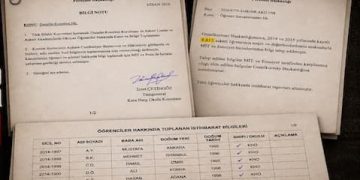
Katran said the General Directorate of Security later filed a compensation lawsuit against soldiers over damage to vehicles and the bridge on the night of the coup attempt. The total claim was around 250,000 Turkish lira, divided among the families.
Because Ragıp Enes had died, the document was sent to his family.
“They both took our brother’s life there and are saying they will collect the damage done to the vehicles from us,” Katran said.
He said the prosecution of cadets and other low-ranking personnel stands in contrast to the promotion or protection of senior officials who failed to prevent the coup attempt.
“If someone attempted a coup, they should be punished for failing to control their subordinates,” he said. “But what happened here? They were rewarded. They were made ministers of national defense, they were commended. The people who should have actually been punished were not, and young people were given life sentences.”
Katran said the outcome of the coup attempt should guide any serious inquiry into who benefited from it.
“There is an event, and whoever benefited from its outcome is the one who orchestrated it,” he said.
‘The events are not as they are portrayed’
Katran offered condolences to everyone who lost loved ones during the coup attempt but said the public needs to question the official account.
“Most of our people need to realize this: The events are not as they are portrayed,” he said. “Someone produced a fictional scenario there and is imposing it. People need to think. These things need to be spoken about to leave a mark in history.”
The account of Ragıp Enes Katran’s death remains one of the most painful cases involving military cadets taken onto the bridge that night: a young air force student killed before trial, buried by his own family without state funeral services, then posthumously treated as a defendant’s family member in a compensation case brought by the state.
Source: BOLD Medya