

A draft report by the parliamentary commission investigating the 2016 coup attempt in Turkey has omitted 293 pages from an earlier version leaked to the press, including testimony concerning the relationship between the ruling Justice and Development Party (AKP) and the Gülen movement.
The preliminary draft circulated in December 2016 contained 936 pages. The version released by commission chairman Reşat Petek contains 643, according to a comparison reported by T24.
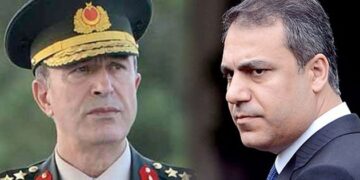
The commission was established to investigate the coup attempt and the circumstances that allowed it to occur. Its credibility has already been undermined by its failure to question Chief of General Staff Hulusi Akar and National Intelligence Organization (MİT) Undersecretary Hakan Fidan in person, despite their central roles in responding to the advance warning received on the afternoon of July 15, 2016.
The released draft repeats the government’s allegation that the Gülen movement organized the coup attempt. The movement denies any involvement, and the commission has not established the allegation through an independent and transparent inquiry.
Testimony concerning the AKP years omitted
Members of the commission from the Republican People’s Party (CHP)—Aykut Erdoğdu, Sezgin Tanrıkulu, Zeynel Emre and Aytun Çıray—said testimony from three former senior state officials was absent from the released draft:
- Former chief of general staff İlker Başbuğ
- Former chief of general staff Işık Koşaner
- Former MİT undersecretary Emre Taner
According to the CHP members, the three men had provided important information about relations between the AKP government and the Gülen movement before their political alliance collapsed. Removing that testimony prevents readers from assessing the government’s own decisions during the period in which the report claims that a parallel structure developed within state institutions.
Another change reinforced that concern. A preliminary section titled “The 2000s: The Justice and Development Party Era and the Formation of a Parallel State” appeared in the released draft only after the reference to the “Justice and Development Party Era” had been removed.
The deletion separates the alleged institutional expansion discussed in the report from the government that had governed Turkey throughout that period.
Entire section of allegations removed
The preliminary draft also contained a section grouping several controversial incidents under Turkey’s government-imposed terrorism designation for the Gülen movement. That section was removed from the released version.
The omitted subjects included:
- The Poyrazköy prosecution, one of several military conspiracy cases later discredited by findings that digital evidence had been manipulated
- The 2009 helicopter crash that killed Great Unity Party leader Muhsin Yazıcıoğlu
- The abduction and killing of journalist Haydar Meriç in 2011
- The 2007 murders of three Christian publishing-house employees at Zirve Publishing House in Malatya
- The interception and publication of a confidential 2014 government meeting concerning possible military action in Syria
- Turkey’s downing of a Russian Su-24 military aircraft near the Syrian border in November 2015
The preliminary draft’s decision to associate these disparate cases with the Gülen movement did not itself establish responsibility. Yet silently removing the entire section, without explaining whether the underlying allegations were unsupported, disputed or withdrawn, further obscures how the commission reached its conclusions.
A credible investigation should not attribute crimes to a community without reliable evidence. Nor should it quietly remove hundreds of pages and important witness testimony without documenting who ordered the changes and why.
The CHP members described the released document as an effort to “whitewash, conceal and hide the political dimension” of the coup attempt. They also accused its authors of directing allegations toward deceased political and public figures—including Süleyman Demirel, Turgut Özal, Kasım Gülek, Vehbi Koç and Bülent Ecevit—who could no longer respond, while minimizing evidence concerning more recent governments.
The document remains a draft rather than Parliament’s final report. Its unexplained alterations, selective treatment of testimony and failure to question the most important serving officials prevent it from resolving the contradictions surrounding the coup attempt.