

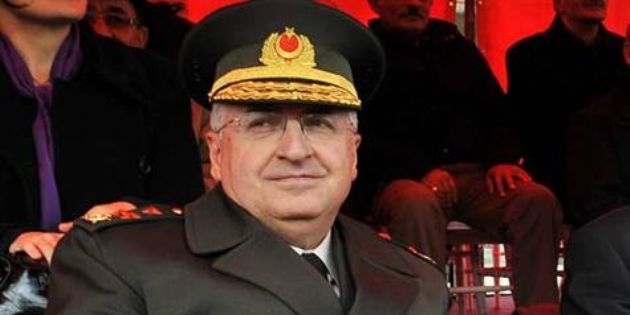
When it was announced that Gendarmerie Commander General Yaşar Güler would visit Washington to give a speech on Turkey’s 2016 coup attempt, there was curiosity about what he would say. The Turkish government claims the coup was orchestrated by the movement led by Fethullah Gülen, but this official narrative has struggled to gain traction in Washington.
As the Deputy Chief of General Staff during the 2016 events, Güler had first-hand knowledge. Hosted by SETA, a think tank closely aligned with the Turkish government, he faced no critical opposition. Despite intense lobbying by the ruling AKP, however, Washington remains skeptical.
For instance, Devin Nunes, then-Chairman of the US House Intelligence Committee, stated in March 2017 that he had not seen evidence supporting Ankara’s claims about the Gülen movement orchestrating the coup.
DENYING IMPRISONED JOURNALISTS DAMAGES CREDIBILITY
Two observations stand out regarding Güler’s Washington panel. First, propaganda-style meetings lacking opposing views receive little attention in the US capital, evidenced by the absence of US media and low overall turnout. Second, Turkish officials continually face questions about press freedom when visiting the US.
During the event, an AKP official repeated the government line that there are no journalists in Turkish prisons, claiming those incarcerated are “terrorists.” Presenting such arguments in the US, where freedom of speech is a core value, often damages the delegation’s credibility, making it harder to convince American audiences of their other claims.
GÜLER FRAMED THE MOVEMENT AS A SECURITY THREAT
Rather than clarifying the unanswered questions regarding the coup attempt, General Güler’s speech heavily relied on themes designed to appeal to American fears about radical groups and secret networks. He repeatedly compared the accused movement to extremist organizations like ISIS, echoing narratives frequently published in Turkey’s pro-government media outlets.
For example, Güler referenced “arranged marriages allegedly organized within the movement” as a sign of their danger, sharing what he framed as classified intelligence. Yet, this raised an obvious contradiction: If military intelligence knew such intimate details about these individuals, how did they fail to detect a massive coup preparation?
Güler did not take questions from the audience or the press, avoiding scrutiny over the lack of concrete evidence for his claims.
DIFFERENT MESSAGES FOR DIFFERENT AUDIENCES
Turkish government representatives often employ different narratives depending on their audience. Domestically, they frequently suggest US intelligence was behind the coup. However, in Washington, they pivot, portraying the accused group as an extremist threat akin to Al-Qaeda to gain American sympathy.
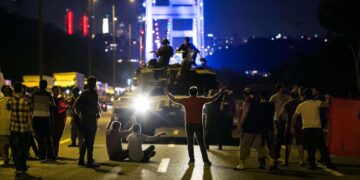
Ultimately, the event appeared to be an attempt to leverage American security paranoias rather than providing transparent answers about a tragic night that cost 249 lives and fundamentally altered Turkey’s political system.