

The European Court of Human Rights’ decision to ask Turkey to respond in cases involving military cadets and lower-ranking soldiers prosecuted after the July 15, 2016 coup attempt could become a turning point for thousands of similar cases, journalist Adem Yavuz Arslan said in a video analysis.
Arslan said the Strasbourg court notified Turkey on May 13, 2026 of two sets of applications concerning post-coup military trials, one involving soldiers from a tank battalion in the eastern province of Kars and another involving Air Force Academy cadets prosecuted over events on the Bosphorus Bridge in İstanbul.
A communicated case is not a ruling on the merits. It means the court has decided to seek the government’s observations on legal questions raised by the applicants rather than reject the case at the initial stage.
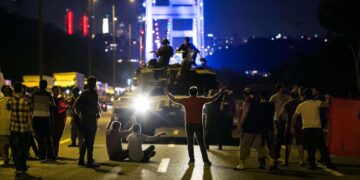
One of the cases identified in the European court’s database is Sibirlioğlu v. Türkiye and 16 other applications, communicated on May 13. The court says the applications concern alleged unfairness in criminal proceedings against members of the armed forces over their deployment to and actions on the Bosphorus Bridge, where Turkish courts said clashes caused the deaths of 34 people and injuries to 318 others.
Arslan said the importance of the cases lies in the questions the court has put to Turkey.
According to Arslan, the court is asking whether domestic courts gave sufficient reasons for the convictions, whether they made individualized assessments of each defendant’s conduct and whether they properly established the material and mental elements of the offense of aiding an attempt to overthrow the constitutional order.
“These are not ordinary applications anymore,” Arslan said, arguing that the court’s questions show it sees serious legal issues in the files.
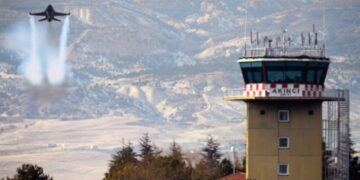
In the Kars case, Arslan said some defendants were initially acquitted or had proceedings against them dropped, only to be convicted after an appellate reversal on the same factual record. He said they received prison sentences ranging from 12 years, six months to 13 years, four months for aiding an attempt to overthrow the constitutional order.
The applicants, he said, argue that the courts failed to explain how their conduct amounted to participation in a coup crime and did not prove criminal intent.
The Air Force Academy case raises similar questions about cadets who were taken into events on July 15 and later convicted as participants in the coup attempt.
Arslan said the court’s questions focus on whether the trial courts relied on collective reasoning and whether they considered each cadet’s individual acts, defenses and evidence. In one example cited in the video, he said the court asked whether a defendant’s argument about firing into the air and not hitting police officers had been properly examined.
The cases matter because many July 15 military trials turned on the same issue: whether presence at a military unit, movement under orders or performance of a limited duty was treated as enough to establish participation in a coup attempt.
Arslan said the court appears to be testing whether Turkish courts distinguished between commanders who planned or directed events and lower-ranking soldiers or cadets who said they followed orders without knowing they were being drawn into a coup attempt.
The legal question goes beyond fair trial rights under Article 6 of the European Convention on Human Rights. The applications also raise Article 7, which prohibits punishment without law.
That issue has become central in recent European court rulings on Turkey’s post-coup prosecutions.
In the Grand Chamber’s 2023 Yüksel Yalçınkaya v. Türkiye judgment, the court found violations of Articles 6 and 7, faulting Turkish courts for attaching criminal liability in a virtually automatic manner to the use of ByLock and for failing to establish the material and mental elements of the offense in an individualized way.
In May 2026 the Grand Chamber also found a violation of Article 7 in Yasak v. Türkiye, saying Turkish courts had convicted the applicant of membership in an armed terrorist organization without an individualized assessment of the required criminal intent.
Arslan said the newly communicated military cases could extend that line of reasoning from alleged Gülen movement membership cases to direct coup-attempt prosecutions.
Ankara designates the Gülen movement, a transnational civic initiative inspired by Islamic scholar Fethullah Gülen, as a terrorist organization and blames it for Turkey’s 2016 coup attempt. The movement denies involvement in the coup or any terrorist activity.
If the European court finds violations, Arslan said, the decisions could open the way for retrial requests in Turkey and force courts to revisit convictions based on broad or collective reasoning.
He said the potential impact would be especially significant for cadets, conscripts, lower-ranking officers and soldiers who were convicted despite arguing that they acted under orders and lacked knowledge of any coup plan.
Arslan cautioned that the European court has not yet issued a judgment. Turkey will first submit its observations, the applicants will respond and a ruling could take time.
But he said the decision to communicate the cases is itself important because it brings core July 15 military trials under Strasbourg review.
The outcome, he argued, could determine whether the European court requires Turkish courts to show, defendant by defendant, what each person knew, what each person did and how those acts amounted to intentional participation in a coup attempt.