


A lawyer representing military cadets in a case linked to Turkey’s July 15, 2016 coup attempt said one of her clients suffered a brain hemorrhage in prison and was not taken to a hospital for 70 days.
Attorney Ayça Çiçek made the allegation during an appearance on journalist Şule Aydın’s YouTube program.
Çiçek represents cadets in the Digiturk case, one of the trials involving military students prosecuted after the coup attempt.
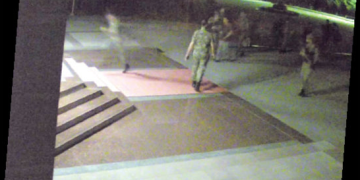
Digiturk is a Turkish satellite television platform. The case concerns events at the company’s building during the night of July 15.
Çiçek said her client hit his head on concrete while playing ball in the prison courtyard and later developed nausea and dizziness.
“My client was playing ball in the courtyard, hit his head on the concrete and suffered a brain hemorrhage,” Çiçek said. “He went to the prison doctor complaining of nausea and dizziness. The doctor said, ‘It’s a migraine. Don’t bother us with the gendarmes,’ and refused to refer him to a hospital.”
She said the cadet was eventually taken to Kanuni Research Hospital after his condition worsened.
“When the nausea and dizziness became unbearable, he was transferred to Kanuni Research Hospital, where he was immediately taken into surgery,” Çiçek said.
The lawyer said neither she nor the cadet’s family was informed that he had been hospitalized or operated on.
“But neither his family nor I was notified,” she said. “I only learned that my client had suffered a brain hemorrhage a week later, from his cellmates during a prison visit. The family had not been told either.”
The account added to complaints from families and lawyers of military students who say cadets were treated as coup plotters despite being young trainees under military command.
The Digiturk case was among several post-coup trials involving military students accused over locations entered by soldiers on the night of July 15.
Families of the cadets have argued that the students were acting under orders, lacked command authority and were not told they were being sent to take part in a coup attempt.
Çiçek’s statement focused on the prison treatment of one cadet after conviction, saying a medical emergency was ignored for weeks despite symptoms that later required surgery.
Her account also raised questions about why the family and lawyer were not notified when the cadet was finally taken to a hospital and operated on.