

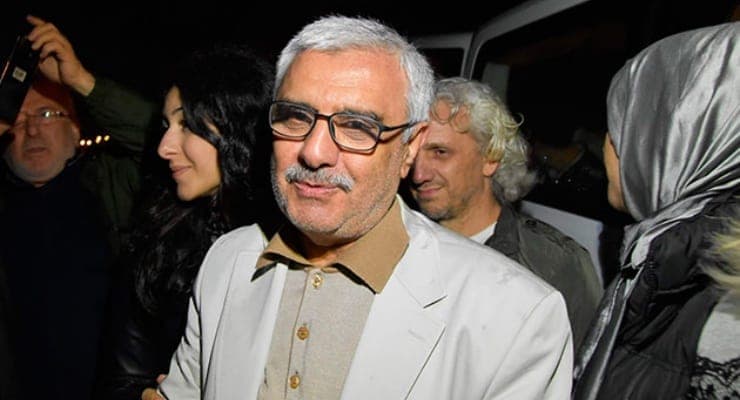
Journalist and writer Ali Bulaç has said he believes Russia planned Turkey’s July 15, 2016 coup attempt to draw Ankara away from NATO and into Moscow’s orbit.
Bulaç made the remarks on Ali Bulaç ile Otobiyografi, a program published on the Atlas Fikir Kulübü YouTube channel, where he discussed what he described as the internal and external dynamics behind July 15.
“In my personal view, the plan for this coup attempt was made by the Russians,” Bulaç said. “The aim was to pull Turkey away from the NATO alliance and bring it over to their side.”
He added that after 2016 Turkey “rapidly moved away from the West and drew closer to Russia,” according to a report summarizing the program.
Bulaç also claimed that inside Turkey the process involved an alliance of Eurasianist, nationalist and ulusalcı circles. The term ulusalcı is generally used in Turkey for a hardline secular nationalist current that is often hostile to Western influence.
His remarks offer a different reading of July 15 from both the Turkish government’s official account and many opposition narratives.
Ankara designates the Gülen movement, a transnational civic initiative inspired by Islamic scholar Fethullah Gülen, as a terrorist organization and blames it for Turkey’s 2016 coup attempt. The movement denies involvement in the coup or any terrorist activity.
Bulaç’s comments should be understood as his personal assessment. No independent court or international investigation has established that Russia planned the coup attempt.
The claim, however, touches on a wider debate over Turkey’s foreign-policy shift after July 15.
Turkey has been a NATO member since 1952, and the Turkish Foreign Ministry describes NATO as a cornerstone of Turkey’s defense and security policy.
Relations between Ankara and Moscow deepened after the coup attempt, most visibly through Turkey’s purchase of the Russian S-400 air defense system.
The United States began removing Turkey from the F-35 fighter jet program in 2019 after Ankara took delivery of the S-400, saying Turkey could not have both the Russian system and the fifth-generation fighter.
Bulaç, a former columnist for the now-closed Zaman newspaper, was detained after the coup attempt and spent 650 days in prison. Turkey’s Constitutional Court later ruled that his rights to freedom of expression and personal liberty had been violated, according to Independent Turkish.
His latest remarks add to continuing disputes over who benefited from July 15, how the coup attempt was used in domestic politics and whether the post-coup period marked a strategic break between Turkey and its Western allies.
Bulaç argued that the coup attempt and the purge that followed were used not only to reshape the state but also to change Turkey’s geopolitical direction.