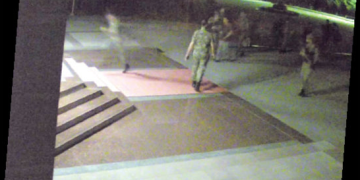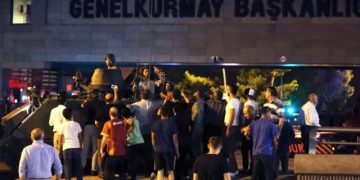



A year after Turkey’s July 15, 2016 coup attempt, some of the youngest Turks on social media were already questioning whether the night unfolded as Ankara described it.
They were teenagers born after 2000, a generation with no memory of Turkey’s earlier military interventions and no personal experience of the fear older Turks associate with coups.
They knew coups from history books, family stories and television images.
Yet their comments on July 15 did not sound like reverence for an official anniversary.
In short and simple sentences, young members of Generation Z explained why the government’s coup narrative did not make sense to them.
Ankara says military officers affiliated with the Gülen movement, a transnational civic initiative inspired by Islamic scholar Fethullah Gülen, organized the attempt to overthrow the government.
Ankara designates the Gülen movement as a terrorist organization and blames it for Turkey’s 2016 coup attempt. The movement denies involvement.
By July 2017, the government had turned the anniversary into Democracy and National Unity Day, a national commemoration built around resistance to the coup attempt and loyalty to the elected government.
State institutions, municipalities, schools and pro-government media promoted the official memory of the night.
But the social media posts pointed to a different problem: even young people with no living memory of a coup were not automatically persuaded.
Their skepticism rested less on ideology than on basic plausibility.
The events they saw and the official story they heard did not fit their idea of how a military takeover works.
That reaction mattered because the government built its post-coup order on public acceptance of a single narrative.
After July 15, emergency rule, mass dismissals, trials and the restructuring of state institutions were justified as necessary responses to the threat Ankara said had been exposed that night.
The young users’ comments showed that this narrative had not reached every part of society with the force the state intended.
For a generation raised on social media, official ceremonies and television broadcasts were not enough to settle the question.
They were not presenting a legal indictment or an alternative timeline.
They were exposing a credibility gap.
In their view, July 15 did not look like the coups they had studied. It looked like a story they were being told to accept.
That is why their reaction remains important.
It showed that doubt about July 15 was not limited to older political groups, soldiers, lawyers, journalists or people targeted after the coup attempt.
It had reached people too young to have lived through Turkey’s coup history and too young to have a stake in its old political battles.
Young people’s reactions to the July 15 coup scenario..pic.twitter.com/kYkpGV22KH
— Today’s Anadolu (@todaysanadolu) 10 July 2017