

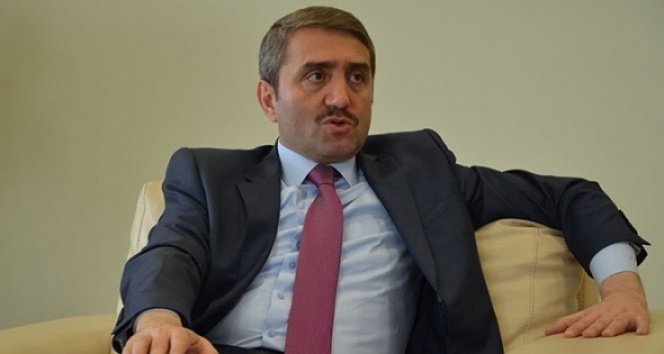
Selim Temurci, a former İstanbul provincial chairman of Turkey’s ruling Justice and Development Party, said President Recep Tayyip Erdoğan could not have been unaware if AKP youth branch officials were involved in the covert distribution of Kalashnikov rifles after Turkey’s July 15, 2016 coup attempt.
Temurci, who later became a deputy chairman of the opposition Future Party, made the remarks on 4. Güç, a program broadcast on TV5.
He was responding to allegations by organized crime figure Sedat Peker, who claimed that unregistered Kalashnikov rifles were distributed to civilians during and after the coup attempt through AKP youth branch networks.
Peker alleged that Süleyman Soylu, then interior minister, coordinated the distribution.
Temurci said the matter would reach beyond Soylu if AKP youth branch officials were involved.
“If my youth branch chairman was involved in something like this, I say openly that this goes beyond Süleyman Soylu,” Temurci said.
He suggested that Berat Albayrak, Erdoğan’s son-in-law and a former finance minister, would have been more likely to have played a role than Soylu.
“Who in this country, in God’s name, could put Kalashnikovs in the car of the AKP İstanbul youth branch chairman and distribute them without the knowledge of our president?” he asked.
Temurci was AKP İstanbul provincial chairman at the time of the coup attempt, a position that gave him direct knowledge of the party’s İstanbul organization.
His remarks added political weight to Peker’s allegations because they came from a former senior AKP official who had led the party’s İstanbul branch during the events in question.
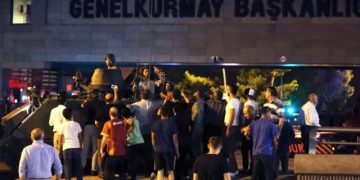
The allegations centered on claims that weapons not registered in the state inventory were handed to civilians during a period when the government was mobilizing supporters against the attempted takeover.
The distribution of weapons to civilians has remained one of the unresolved questions surrounding July 15.
Opposition figures have called for an investigation into who received the weapons, whether they were recorded in official inventories and who authorized their distribution.
Temurci’s comments pointed to the command structure behind the alleged operation.
He argued that an action involving the official vehicle of the AKP İstanbul youth branch chairman could not have been carried out without approval from higher levels of political power.
Peker did not present judicial evidence with his claims, and the allegations had not been established by a court.
But the claims drew attention because they came during a period when Peker was releasing a series of accusations about links among organized crime figures, politicians and state officials.
Temurci’s intervention moved the debate from Peker’s allegations to the role of the AKP’s own party organization on the night of the coup attempt and in the weeks that followed.