


A report by Baybars Zengin on 15temmuz.info argues that the official timeline for the killing of President Recep Tayyip Erdoğan’s bodyguard Mehmet Çetin during Turkey’s July 15, 2016 coup attempt is fundamentally flawed, claiming that Çetin was killed by a separate masked team that arrived in Marmaris hours before the soldiers later convicted in the case.
The claim challenges Ankara’s official account of the attempted raid on the hotel in Marmaris, where Erdoğan had been staying before leaving for İstanbul. Prosecutors portrayed the operation as an assassination attempt carried out by coup soldiers seeking to capture or kill the president.
Protection officers waited after Erdoğan left
According to the report, Erdoğan left Marmaris by helicopter at around 11:30 p.m. on July 15. Presidential protection officers then returned to their villas and waited, even though Erdoğan was no longer there and their primary duty was to accompany and protect him.
Zengin describes this as highly unusual. The report says the protection officers should normally have gone to İstanbul with Erdoğan rather than remaining at the hotel after the president’s departure.
Within about an hour, the report says, the first attack began. The presidential protection officers were not expecting it.
According to testimony by İrfan Paksoy, a presidential bodyguard who entered the clash with Mehmet Çetin, and statements from hotel staff and tourists in the court file, helicopter sounds were heard between midnight and 12:30 a.m. on July 16.
Witnesses described heavily armed men in black camouflage, whom the report says were disguised in fake military uniforms, descending by rope from a helicopter onto the beach about 20 to 30 meters from villa number 1782, where the police officers were staying.
The protection officers took positions inside the room. Paksoy and Çetin moved toward the rear of the villa, thinking attackers could come from behind. They then saw the team running toward them.
The report says the masked team opened fire as soon as it saw the police. Çetin was caught in the crossfire and could not leave his position. After intense gunfire, the team in black left the area. When Paksoy reached Çetin, he saw that he had been killed by shots to his back, below his rib cage and his leg.
Paksoy gave statement hours after the incident
Paksoy described the attack in testimony given at 7:40 a.m. on July 16, roughly seven hours after the shooting. The report also refers to a two-page investigation document prepared by the Marmaris District Police Department.
Zengin says that testimony and other records place Çetin’s killing between midnight and 12:30 a.m. The soldiers commanded by Sönmezateş and Seymen, however, did not encounter Erdoğan’s bodyguards until around 3:45 a.m., according to the report’s reading of court testimony and evidence.
“It is impossible,” the report argues, for the Sönmezateş team to have committed a killing that took place nearly three hours before they arrived.
Report says two different teams were described
Zengin also argues that the team seen between midnight and 12:30 a.m. differed in appearance, equipment and landing location from the soldiers who arrived later under Sönmezateş’s command.
The report says the later soldiers were dropped not on the beach but in the backyard of the Casa De Maris Hotel, more than 500 meters from the beach where the earlier team was described. They also did not descend by rope, according to the report.
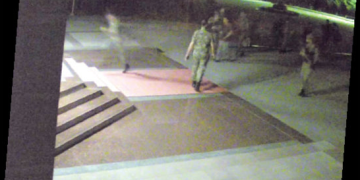
Witnesses in the Marmaris trial said the earlier team was dressed in black and had covered faces. The soldiers under Sönmezateş’s command, by contrast, wore Turkish Armed Forces camouflage uniforms, had uncovered faces and carried night vision goggles mounted on their helmets, which the report says can be seen in footage from the incident.
The report says the Marmaris court’s reasoned decision also included descriptions of a team that appeared to have disguised itself as soldiers.
Gas masks, 7.62 mm casings and SADU ammunition
According to the report, the earlier masked team left behind gas masks, 7.62 mm bullet casings and special SADU-brand bullet casings when it left the area about 15 to 20 minutes before the later soldiers arrived.
Zengin says those items were recorded in the court file but do not match the weapons and equipment of the soldiers commanded by Sönmezateş.
The soldiers who arrived later did not have gas masks, the report says. They also carried weapons capable of firing 5.56 mm rounds, while hundreds of 7.62 mm casings allegedly belonged to the earlier team.
The report further claims that the Turkish Armed Forces do not use SADU-brand ammunition and that the casings must therefore have belonged to another state institution with such weapons and ammunition in its inventory.
Zengin says the wounds suffered by Mehmet Çetin and police officer Nedip Cengiz Eker, who was also killed that night, were not consistent with 5.56 mm ammunition. The report says one shot caused damage severe enough to almost tear off one of the dead officer’s legs, while the entry wound on Eker’s body was also unusually large.
By contrast, the report says, 5.56 mm rounds used by the Sönmezateş team would normally leave much smaller wounds.
Medical witnesses place shooting around 1 a.m.
The report cites testimony from doctors and medical personnel sent to the scene after the clash, saying they also placed Çetin’s shooting roughly three hours before the accused soldiers arrived.
Kubilay Direksiz, the ambulance driver sent to assist Çetin, said the 112 Emergency Service received news that Çetin had been shot at around 1 a.m.
Dr. Sabahattin Barış Kurt and medical technician Duygu Ayaz, who arrived at the scene in the same ambulance, said the incident occurred at 1 a.m. and that when they reached the area, the helicopters that carried out the attack were still present, according to the report.
Zengin says numerous witnesses testified that the earlier team descended onto the beach from helicopters using ropes and had covered their faces with gas masks.
Report’s reconstructed timeline
The report reconstructs the night as follows:
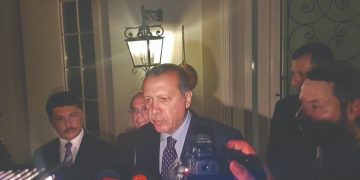
At 11 p.m., Erdoğan made a statement to local journalists at the villa where he had been staying in Marmaris.
At 11:30 p.m., Erdoğan left Marmaris by helicopter.
At 12:05 a.m., the statement Erdoğan had made at 11 p.m. was broadcast as if it were live, creating the impression that he was still in Marmaris.
Between midnight and 12:30 a.m., teams disguised as soldiers allegedly arrived in three helicopters from a state institution other than the Turkish Armed Forces. They descended by rope onto the beach in front of Erdoğan’s villa and killed presidential protection officer Mehmet Çetin, according to the report.
At 12:24 a.m., Erdoğan connected to CNN Türk and other television channels in a way that made it appear he was still at the villa in Marmaris under limited communication conditions, although the report argues he was already elsewhere.
At 2:15 a.m., soldiers under the command of Sönmezateş and Seymen departed from Çiğli in İzmir in three helicopters.
At 3:20 a.m., soldiers under Seymen’s command were dropped into the garden behind the Casa De Maris Hotel in Marmaris.
At 3:45 a.m., those soldiers encountered Erdoğan’s bodyguards, leading to a brief clash.
At 3:50 a.m., the report says, Erdoğan’s bodyguards surrendered to the soldiers and were questioned.
At 4:10 a.m., after confirming that Erdoğan had left, the soldiers under Seymen’s command returned via the coastal road.
At 4:20 a.m., police officers who had taken positions to kill the soldiers opened fire in front of the Casa De Maris Hotel, according to the report.
At 4:25 a.m., the soldiers entered the hotel to avoid the clash and went to the lower floor.
At 4:50 a.m., they left through the rear exit and took shelter in a villa on the beach.
At 5 a.m., the helicopters that were supposed to extract the soldiers had to leave after coming under fire.
At 6 a.m., the soldiers found a mountain road and left Marmaris.
Report points to the National Intelligence Organization
Zengin concludes that the soldiers under Sönmezateş and Seymen “absolutely did not” kill Mehmet Çetin. The report says the killing was carried out by members of a special team brought from another state institution with Sikorsky helicopters and heavy weapons in its inventory.
According to the report, the only institutions in Turkey other than the Turkish Armed Forces with Sikorsky helicopters are the National Intelligence Organization and the General Directorate of Security.
Zengin argues that only one institution had the ability to plan, coordinate and carry out an operation of this kind: the National Intelligence Organization.
The report says the National Intelligence Organization had a small number of Sikorsky helicopters and that three Sikorsky helicopters arrived in Marmaris roughly three hours before the soldiers. It also suggests that a group within the Police Aviation Department may have contributed to the operation.
Zengin speculates that the masked team may have included people still working in the intelligence agency, people with Special Forces experience who later continued within SADAT, a private Turkish military contractor, or ultra-nationalist retired or active-duty soldiers involved in the torture of soldiers detained after the coup attempt.
Those claims remain allegations presented by the report, which says the truth is waiting for the right time to emerge.
Report says court ignored evidence of earlier team
Zengin asks whether these issues were discussed during the Marmaris trial and answers that they were.
The report says the earlier team sent to Marmaris was described in court for months through nearly 50 witness statements and dozens of records, minutes, reports and documents.
But Zengin says the court panel ignored that material and instead adopted a role shaped by politicians and ultra-nationalist factions rather than by the duties of judging and prosecuting.
He describes the court decision as a dark stain on Turkey’s legal history and says it will eventually be understood as a fabrication built on lies.
The report further says the team disguised as soldiers killed not only Mehmet Çetin but also Nedip Cengiz Eker, a police officer serving at the Marmaris District Police Department, wounded other officers and tried to kill tourists.
Zengin says the purpose was to make the coup attempt appear larger and bloodier.
The article says this aspect of the incident will be addressed in the next section.
Source: 15temmuz.info