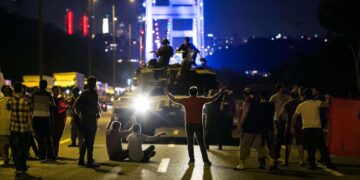



President Recep Tayyip Erdoğan said passport restrictions imposed on 181,500 people after Turkey’s July 15, 2016 coup attempt would be lifted within days, acknowledging the scale of travel bans that affected citizens because of allegations against their relatives.
Speaking at a parliamentary group meeting of his ruling Justice and Development Party in July 2018, Erdoğan said investigations and trials had reached “a certain stage.”
“The passport restrictions concerning 181,500 people will be lifted within a few days, provided there is no legal obstacle,” Erdoğan said.
The announcement highlighted one of the broadest forms of collective punishment imposed during Turkey’s post-coup purge: travel restrictions not only on people directly dismissed, investigated or prosecuted but also on their spouses and relatives.
After the coup attempt, the government canceled or refused to issue passports for large numbers of people dismissed by emergency decrees, known in Turkey as KHKs, as well as for some family members who faced no direct criminal accusation.
Many affected citizens said they were trapped in Turkey despite not being charged or convicted, while also facing dismissal, blacklisting and professional exclusion.
Erdoğan’s statement did not amount to a full reversal of the travel bans.
He said passports would be restored only where there was “no legal obstacle,” leaving authorities discretion to keep restrictions in place in cases involving investigations, prosecutions or security claims.
The announcement came near the end of Turkey’s two-year state of emergency, during which more than 100,000 public servants were removed from their jobs and sweeping restrictions were imposed through executive decree.
Rights advocates and purge victims said the passport bans punished families for allegations they had no role in and turned administrative measures into a tool of social and economic pressure.