


A defense lawyer for a Turkish military pilot accused of bombing parliament during the July 15, 2016 coup attempt said his client had spent 14 months in pretrial detention despite a report showing he was not flying at the hour prosecutors linked him to the attack.
Attorney Kemal Uçar made the claim on Çağlar Cilara’s program on KRT TV, saying the allegation against his client rested on material that could not withstand scrutiny.
Uçar said the pilot identified as the person who bombed the Turkish parliament was not in the air at the relevant time and that the audio recordings released in connection with the allegation were fake.
He said his client had been waiting in jail for 14 months simply to tell the court, “This person is not me,” and present the report he said proved it.
The claim strikes at one of the most symbolically important allegations in Turkey’s coup-attempt trials.
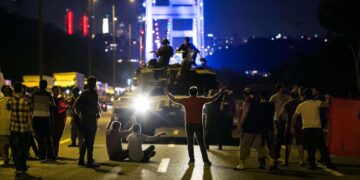
In the early hours of July 16, 2016, Turkish F-16 jets struck the parliament building in Ankara, causing major damage in what was widely reported as the first bombing of the legislature in the history of the Turkish republic.
Prosecutors and pro-government media have treated the bombing as one of the central crimes of the attempted takeover.
Earlier reports citing case files and testimony named several pilots and commanders in connection with the airstrikes, including claims about who allegedly gave the order, who provided coordinates and who carried out the attack.
Uçar’s statement challenges that evidentiary chain.
His argument is not merely that his client denies guilt, but that the timeline and recordings used to identify him are unreliable.
The allegation is especially significant because Turkish coup-attempt cases have relied heavily on flight logs, radio traffic, audio recordings and command-chain claims to connect individual pilots to specific attacks.
If a pilot accused of bombing parliament was not flying at the relevant hour, as Uçar claims, that would raise questions about how prosecutors identified pilots, matched aircraft activity to defendants and evaluated contradictory technical evidence.
The lawyer’s remarks also come amid wider criticism of prolonged pretrial detention in coup-attempt cases.
Many defendants have been jailed for months before being able to directly challenge the evidence against them in court.
Uçar’s claim that his client spent 14 months in detention before presenting a report saying he was not the pilot points to a core defense complaint: that courts are treating accusation and pretrial detention as substitutes for individualized proof.
Ankara blames the coup attempt on the Gülen movement, a transnational civic initiative inspired by Islamic scholar Fethullah Gülen, and designates the movement as a terrorist organization.
The movement denies involvement in the coup attempt or any terrorist activity.
Uçar’s allegations do not establish who bombed parliament.
But they do sharpen a key question in the air force trials: whether the prosecution can prove, through reliable technical records rather than publicized recordings and broad allegations, which pilot carried out which act on the night of the attempted takeover.