


Journalist Ahmet Nesin has described Turkey’s July 15, 2016 coup attempt as a “staged” event, alleging that senior political, military and intelligence figures have not been held accountable for contradictions in the official account.
Nesin made the remarks in August 2021, as debate continued over unanswered questions surrounding the coup attempt, its aftermath and the mass purge that followed.
He said photographs presented as evidence that the Turkish parliament had been bombed did not appear convincing to him.
“When I saw the photos described as showing the parliament being bombed, I snapped to attention — I could cause more damage throwing a firecracker,” Nesin said.
He also questioned the role of then-prime minister Binali Yıldırım, saying Yıldırım “knew nothing about the events.”
“There was an attempt to kill him; if he had been killed, there would have been no need to panic,” Nesin said.
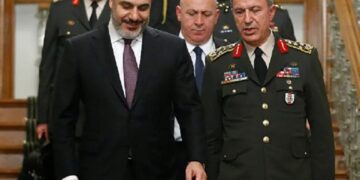
Nesin directed his sharpest accusation at Hulusi Akar, who was chief of General Staff at the time and later became defense minister.
“Hulusi Akar is the figure at the head of the coup — number one,” Nesin claimed.
He also said then-National Intelligence Organization chief Hakan Fidan was “uncomfortable with Erdoğan” and came from what he described as the Abdullah Gül faction, referring to Turkey’s former president and co-founder of the ruling Justice and Development Party, or AKP.
Nesin also questioned the conduct of Nationalist Movement Party, or MHP, leader Devlet Bahçeli on the night of the coup attempt.
“Devlet Bahçeli waited that evening to see who would win, and only told the public, ‘Don’t go out into the streets,’” Nesin said.
He further claimed that Adil Öksüz, whom Turkish authorities describe as a key civilian figure in the coup attempt, was deliberately “left there as a piece of evidence.”
Nesin also referred to Erol Olçok, Erdoğan’s longtime advertising strategist, who was killed on the Bosporus Bridge on the night of July 15.
“I do not believe that advertiser Erol Olçok, who was killed, was killed without Erdoğan’s knowledge,” he said.
Nesin claimed that “Ergenekon has begun to run the country,” using the term as a shorthand for secular-nationalist state networks that were once targeted in the Ergenekon trials and later re-emerged in debates over Turkey’s security bureaucracy.
“I wonder how many more coups and coup attempts I will live to see,” he added.
Nesin’s comments are part of a wider counter-narrative challenging Ankara’s account of July 15, especially the roles of Akar, Fidan, Erdoğan, Bahçeli, Öksüz and other figures whose actions that night remain disputed.
Turkish Minute reported around the fifth anniversary of the coup attempt that secular and opposition figures were increasingly challenging the government narrative, pointing to inconsistencies and unanswered questions about the events.