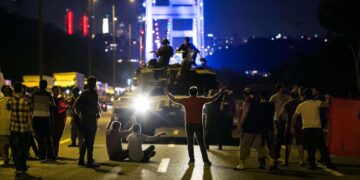



Reşat Petek, a former Justice and Development Party lawmaker who chaired the Turkish parliament’s commission on the July 15, 2016 coup attempt, said the commission’s report could not have simply disappeared, insisting that it was completed and delivered to then-speaker İsmail Kahraman in front of cameras.
Speaking to Tarafsız, Petek said parliamentary investigative commissions are transparent and open to the press unless they adopt a confidentiality decision.
“There is no such thing as this report going missing,” Petek said. “Parliamentary investigative commissions are transparent and open unless they issue a confidentiality ruling. We carried out all our work in front of the press.”
Petek said the commission completed the report, including dissenting opinions from opposition members, and delivered it to Kahraman.
“We completed the report — together with the opposition dissenting opinions — and delivered it to then-speaker İsmail Kahraman in front of cameras,” he said.
Petek said he had no information about what happened after the handover.
The report’s fate has remained a matter of dispute because it was never officially published or debated in the general assembly.
According to Sözcü, the report was handed to Kahraman on July 12, 2017, but parliament later said no finalized report had been submitted to the speaker’s office, preventing it from being printed and distributed.
Petek said he called then-speaker Mustafa Şentop after reports emerged that the document had gone missing and asked whether there had been an error that should be corrected.
He said Şentop told him he had just learned about the issue and would ask the technical team to examine it.
Petek said Şentop never got back to him after that conversation.
The commission report has been controversial since 2017, when Turkish Minute and the Stockholm Center for Freedom reported that the draft failed to clarify key questions about the coup attempt and largely repeated the government narrative.
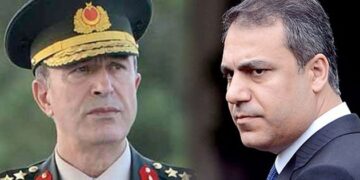
Critics have also pointed to the commission’s failure to hear several key figures, including then-chief of General Staff Hulusi Akar and then-National Intelligence Organization chief Hakan Fidan, whose actions before and during the coup attempt remain central to unresolved questions.
Ankara blames the coup attempt on the Gülen movement, a transnational civic initiative inspired by Islamic scholar Fethullah Gülen, and designates the movement as a terrorist organization. The movement denies involvement in the coup attempt or any terrorist activity.