

Journalist Ahmet Nesin said in an August 14, 2020 video that the transportation of thousands of people from Ankara’s Sincan district to the city center by train on the night of Turkey’s July 15, 2016 coup attempt was further evidence that the official narrative was collapsing.
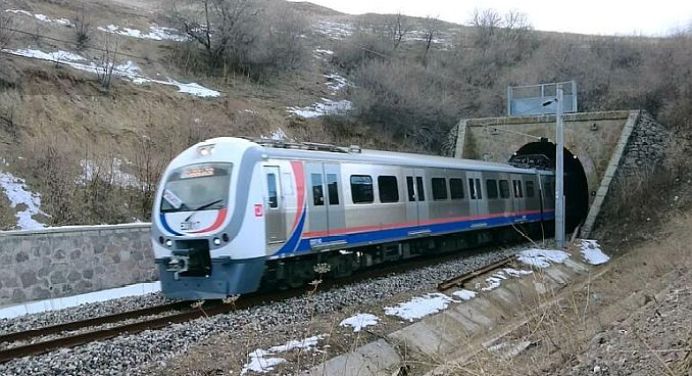
Nesin said he was not discussing the coup attempt in general but one “interesting” detail: a train leaving Sincan for Ankara on the night of July 15. He read from a report saying that after thousands gathered in Sincan, train sets placed on the high-speed rail line transported people to central Ankara while they chanted religious slogans.
Ankara blames the coup attempt on the Gülen movement, a transnational civic initiative inspired by Islamic scholar Fethullah Gülen, and designates the movement as a terrorist organization. The movement denies involvement.
‘How was this organized so quickly?’
Nesin questioned how the State Railways and Sincan Municipality could have coordinated such a large transport operation during the night if the mobilization was not planned in advance.
He said Sincan did not ordinarily have the kind of train service described in the report and that six train sets were placed on the high-speed rail line after talks between the Turkish State Railways and the municipality.
He argued that even arranging six buses at such speed would be difficult, let alone placing train sets on a line, filling them with passengers and moving them toward Ankara during a night of alleged military danger.
Nesin also questioned the claim that the trains moved with their lights off to avoid being bombed, saying this implied a level of operational awareness that appeared inconsistent with a spontaneous public reaction.
Religious slogans instead of democratic slogans
Nesin focused on footage in which people on the train chanted “Allahu Akbar” and salawat prayers. He said he found it striking that the mobilization against a coup was framed almost entirely through religious slogans rather than democratic language.
He said that in earlier Turkish coups and military interventions, including 1960, March 12, 1971, September 12, 1980 and February 28, 1997, he had not seen anti-coup mobilization take such a form.
Nesin said opposing a coup should primarily be a democratic stance, yet the July 15 crowds shown in the footage appeared to move under a different logic.
He argued that in such an atmosphere, even saying “long live democracy” might have sounded out of place because the crowd was mobilized through command, faith-based slogans and hostility rather than democratic conviction.
Comparison with bridge violence
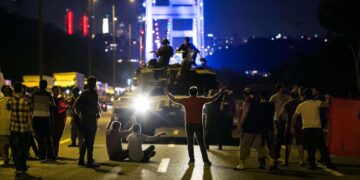
Nesin linked the Sincan train footage to the violence on İstanbul’s Bosporus Bridge, now officially called the July 15 Martyrs Bridge, where soldiers were attacked by civilians after the coup attempt failed.
He said the same religiously charged atmosphere could be seen in the bridge events and suggested that this climate helped produce mob violence against soldiers.
He also referred to the death of Erdoğan campaign strategist Erol Olçok and his son on the bridge, repeating his view that Olçok’s route and death remain suspicious within the broader July 15 narrative.
Nesin asked who armed some of the civilians on the night of the coup attempt and whether weapons distributed from police stocks were later recovered.
‘Counter-coup preparation’
For Nesin, the Sincan train episode pointed to what he called preparation for a counter-coup at the same time as the coup attempt itself.
He said the image of train sets rapidly prepared, crowds gathered, slogans unified and people transported into Ankara showed a level of organization incompatible with a purely improvised civilian reaction.
He also compared the train issue with other contested July 15 details, including the role of the Directorate of Religious Affairs and the decision to broadcast calls from mosques during the night.
Nesin argued that Turkey’s leaders knew a coup-like development was coming, chose not to stop it and used it for political benefit.
He said the night involved an actual attempt or movement by some actors, but also a leadership that was aware of it, allowed it to unfold and then shaped the aftermath in its own interest.
Criticism of Berat Albayrak
The video also included criticism of Berat Albayrak, Erdoğan’s son-in-law and then-treasury and finance minister. Nesin referred to Albayrak’s appearance on a television program hosted by Ahmet Hakan and said his body language suggested anxiety and contradiction.
Nesin mocked Albayrak’s claim that he was keeping his eyes open during the events, saying the minister seemed unaware of the state of the economy and the exchange rate despite being responsible for it.
The remarks connected the July 15 debate to broader criticism of the Erdoğan government’s credibility, governance and public messaging.
Nesin says evidence continues to surface
Nesin said the Sincan train case was one of the most important pieces of evidence showing that a political and logistical plan existed alongside the events of July 15.
He said new signs of preparation, planning and manipulation were emerging every day and that a badly written scenario would eventually collapse.
The video below presents Nesin’s discussion of the Sincan train mobilization, religious slogans during July 15, allegations of prior planning and his broader claim that the official narrative of the coup attempt is falling apart.