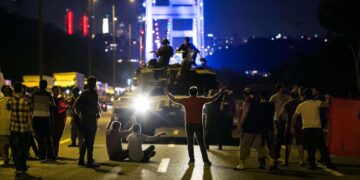



A Turkish lawyer representing soldiers on trial over their deployment to Taksim Square in central İstanbul during the failed military coup on July 15, 2016, said 52 of 58 spent cartridge cases recovered from the scene did not come from military weapons, raising questions about who fired most of the rounds there.
Kemal Uçar discussed the evidence during a television program with KRT news director Çağlar Cilara. A video excerpt from the program was shared on Twitter by the Kac Saat Oldu account.
Uçar said the soldiers acknowledged firing several rounds into the air but that the remaining cartridge cases could not be linked to their weapons.
He asked who had fired those rounds and why their presence at the scene had not been explained.
“Who are the mysterious killers who used these weapons?” Uçar asked in the video.
The claim raises questions about the evidence being used in the trial of 99 soldiers accused of attempting to take control of Taksim Square, one of İstanbul’s main public spaces, during the coup attempt.
The clashes in and around the square left 39 people injured. Eleven defendants were in pretrial detention, while four officers remained at large when the trial began in July.
Prosecutors are seeking three aggravated life sentences for each defendant on charges of attempting to overthrow the government, parliament and the constitutional order. Thirty-seven of the soldiers also face sentences of up to 780 years on attempted murder charges.
The indictment alleges that commanders Müslüm Kaya and Nebi Gazneli ordered soldiers to remove barricades, open fire and proceed to Taksim Square. It also cites WhatsApp messages in which officers discussed sending reinforcements and air support to the square.
Some rank-and-file soldiers have testified that they were not told they were taking part in a coup. One conscript said his commander told the unit that soldiers in Taksim had been injured and that they were being sent to assist them.
Uçar’s allegation raises the question of whether investigators established which weapons caused each of the 39 injuries before prosecutors charged the soldiers with attempted murder.
President Recep Tayyip Erdoğan’s government accuses the Gülen movement of organizing the coup attempt. Fethullah Gülen, a Turkish Islamic scholar living in Pennsylvania, has denied involvement and condemned the attempted military takeover.
The government has jailed more than 50,000 people pending trial and dismissed or suspended about 150,000 from public and private sector jobs since the coup attempt. Rights groups and Turkey’s Western allies have accused Erdoğan of using the failed takeover to silence critics and remove opponents.