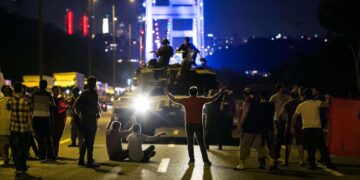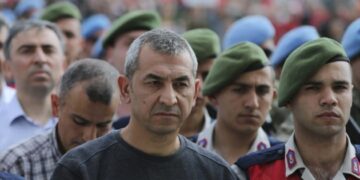



Turkish Interior Minister Süleyman Soylu said more than 48,000 people were jailed pending trial in 2017 in investigations targeting the Gülen movement, showing that mass arrests continued long after Turkey’s July 15, 2016 coup attempt.
Speaking at a security and anti-drug meeting in İzmir in January 2018, Soylu said 48,305 people had been arrested in 2017 as part of investigations launched against the movement after the coup attempt.
The figure showed that the post-coup crackdown did not slow after the immediate aftermath of the failed putsch but continued throughout the following year through nationwide police operations, detentions and prosecutions.
The Gülen movement is a transnational civic initiative inspired by Islamic scholar Fethullah Gülen.
Ankara blames the coup attempt on the movement and designates it as a terrorist organization. The movement denies involvement in the coup or any terrorist activity.
Soylu, using the government’s pejorative acronym for the movement, described July 15 as a “milestone” and said the state had confronted what he called a threat that had “enveloped the state like a virus.”
His remarks reflected the language used by Turkish officials to justify a sweeping purge that extended far beyond alleged military participants in the coup attempt.
After the coup attempt, Turkish authorities detained and prosecuted soldiers, judges, prosecutors, police officers, teachers, academics, journalists, businesspeople and civil servants over alleged links to the movement.
Rights groups and purge victims said many cases relied on broad indicators of affiliation, such as employment at closed institutions, union membership, bank accounts, school enrollment, use of certain communication tools or alleged social ties, rather than evidence of direct involvement in violence or the coup attempt.
The 2017 figure announced by Soylu underscored the scale of the campaign: tens of thousands of people were jailed in a single year under investigations framed by the government as counterterrorism and coup-related cases.
For critics, the arrests showed how the coup attempt became the basis for a continuing legal and administrative purge against a broad civilian population accused of links to the Gülen movement.