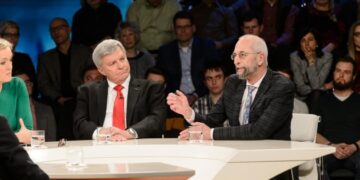


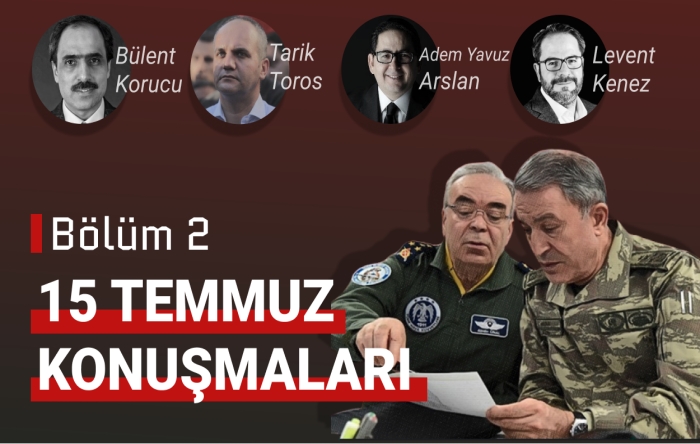
The second episode of TR724’s “July 15 Talks,” broadcast on July 10, 2020, focused on the night of Turkey’s July 15, 2016 coup attempt, with the panel questioning unusual developments at the General Staff, İstanbul’s Bosporus Bridge, Akıncı Air Base and several other locations across the country.
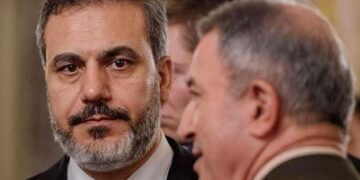
The panel’s central argument was that the details of the night point not to a conventional military coup attempt but to a controlled scenario whose organizers, in the speakers’ view, included then-National Intelligence Organization (MİT) chief Hakan Fidan, then-Chief of General Staff Hulusi Akar and President Recep Tayyip Erdoğan.
Ankara blames the coup attempt on the Gülen movement, a transnational civic initiative inspired by Islamic scholar Fethullah Gülen, and designates the movement as a terrorist organization. The movement denies involvement.
General Staff and command chain questioned
The panel discussed the General Staff headquarters in Ankara as one of the night’s most critical locations, asking why top commanders and intelligence officials acted as they did during the hours before and after the military mobilization became visible.
The speakers questioned the official account of when Akar and Fidan learned of the coup attempt, what they did with that information and why clearer preventive measures were not taken if the state knew an extraordinary military movement was underway.
They argued that the timing and sequence of events suggested not a sudden failure of state institutions, but a pattern of decisions that allowed the night to unfold in a way that strengthened the post-coup narrative.
Bosporus Bridge scene examined
The episode also addressed İstanbul’s Bosporus Bridge, now officially called the July 15 Martyrs Bridge, where soldiers blocked traffic and civilians later confronted them.
The panel asked why a real coup would begin with a partial, highly visible closure of a bridge instead of a broader seizure of strategic state, media and transportation nodes.
The speakers said the bridge became the most powerful visual symbol of the coup attempt but also raised difficult questions about the role of young soldiers, conscripts and cadets who were placed in front of civilians without clear knowledge of the political context.
They said the scene appeared designed to create public shock and mobilization rather than to achieve a coherent military objective.
Akıncı Air Base and air activity
The program then turned to Akıncı Air Base near Ankara, which prosecutors later described as the command center of the coup attempt.
The panel questioned why Akıncı became central to the official narrative instead of Eskişehir, where Turkey’s air operations command structure would ordinarily have been more decisive in a genuine air campaign.
The speakers discussed unusual activity at the base, including disputed claims about aircraft movements, unidentified personnel and the presence of military and civilian figures later placed at the center of the case.
They argued that later court files and public accounts left unresolved questions about who controlled which aircraft, what orders were issued and why some technical records were not fully clarified.
Weddings in İstanbul and Ankara
Another focus of the episode was the presence of senior military figures at weddings in İstanbul and Ankara on the night of July 15.
The panel said those gatherings mattered because they removed or gathered key officers at specific locations during a night when command decisions were crucial.
The speakers questioned whether the simultaneous attendance of important military figures at social events was coincidence or part of a broader pattern that affected who was available, who could be reached and who could be portrayed in certain roles once the coup attempt began.
Moda Naval Club and Jandarma headquarters
The episode also addressed activity at the Moda Naval Club in İstanbul and the Jandarma General Command headquarters in Ankara.
The panel presented these locations as part of the broader puzzle of July 15, arguing that several military, police and intelligence movements that night did not fit neatly into the official story.
At the Jandarma General Command, the speakers said later proceedings and witness accounts raised questions about who fired at whom, how deaths occurred and why some evidence was not pursued more aggressively.
They said the movement of commanders, police units and armed personnel around such sites showed the need for a more complete reconstruction of the night.
Panel points to Fidan, Akar and Erdoğan
The episode’s description said the details of the night pointed to the activities of Fidan, Akar and Erdoğan as organizers of the process.
The panel framed that claim through questions about timing, communication, warnings, official silence and later political use of the events.
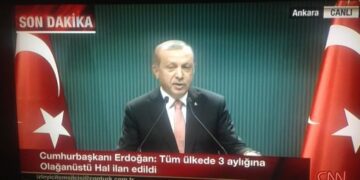
The speakers argued that the coup attempt’s aftermath, including emergency rule, mass purges, media closures, judicial restructuring and the shift to an executive presidential system, made the night’s unresolved details politically decisive.
They said July 15 should be examined not only through dramatic images of tanks, bridges and aircraft but also through official decisions, missing records, court contradictions and the positions taken by the state’s most powerful actors.
Episode sets up deeper review of Akıncı and the bridge
The second episode served as a transition from the road to July 15 to the events of the night itself. Later episodes in the series focused more closely on the Bosporus Bridge, Akıncı Air Base, Marmaris, the Jandarma General Command, the Naval Forces Command and key figures whose roles remain disputed.
The video below presents the second episode of TR724’s July 15 Talks, focusing on the night of the coup attempt, the General Staff, the Bosporus Bridge, Akıncı Air Base, the weddings in İstanbul and Ankara, the Moda Naval Club and the Jandarma General Command.