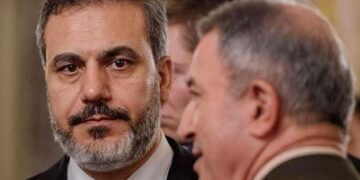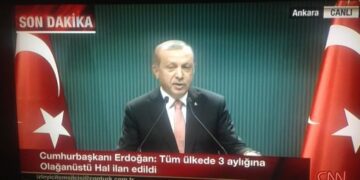



Journalist Ahmet Nesin continued his interview series with exiled Col. Hüseyin Demirtaş in a February 19, 2020 program examining the role of naval vessels in the Marmara Sea before and during Turkey’s July 15, 2016 coup attempt.
According to the program description, Nesin and Demirtaş discussed what happened before and after the coup attempt, arguing that the public had not seen the full picture and that Turkey’s government-controlled media had shaped perceptions of the events.
Ankara blames the coup attempt on the Gülen movement, a transnational civic initiative inspired by Islamic scholar Fethullah Gülen, and designates the movement as a terrorist organization. The movement denies involvement.
Orders to ships in the Marmara Sea
The video description said the program addressed the question of what orders were given to Turkish naval vessels operating in the Marmara Sea on the night of July 15.
The framing suggested that the episode treated those orders not as routine military instructions but as part of a contested sequence of events that Demirtaş said should be examined in detail.
The discussion was presented as an attempt to reconstruct how naval personnel and vessels were positioned during the coup attempt and whether some ships were placed in circumstances later used against their commanders or crews.
Claims of forged documents
The program description also asked which soldiers allegedly set a trap through document falsification.
That claim placed the episode within Nesin’s broader July 15 series, which repeatedly questioned whether official documents, orders or case files were used to build accusations after the fact.
The video’s title, “Betrayal minute by minute,” suggested a chronological reconstruction of decisions, orders and alleged manipulations in the naval dimension of July 15.
Which ships were at the center?
Nesin’s description said the program examined which ships were at the center of the alleged trap and which vessels were involved from the beginning.
Without the full transcript, the specific vessels and claims cannot be independently summarized from the supplied material alone. But the description makes clear that Demirtaş’s remarks focused on the Navy and on events in the Marmara Sea as a separate and disputed part of the July 15 story.
Media narrative questioned
The program description urged viewers to listen carefully, saying the interview would show the coup attempt from an angle they had not seen before.
It also said viewers would understand how much remained unknown and how controlled media had directed and shaped public opinion.
Nesin presented the episode as part of an ongoing effort to revisit July 15 through testimony from military insiders, especially those who left Turkey after the coup attempt and challenged the official account from abroad.
Series promises continued scrutiny
The description said Nesin and Demirtaş would continue discussing developments before and after the coup attempt and that the statements in the episode were likely to be debated.
Nesin said he would continue writing and speaking until all facts about July 15 were revealed.
The video below presents Ahmet Nesin’s interview with Col. Hüseyin Demirtaş on naval vessels in the Marmara Sea, alleged forged documents and claims that some ships were placed at the center of a July 15 trap.