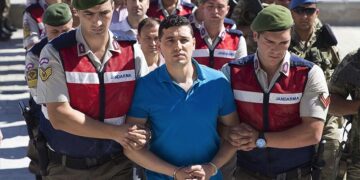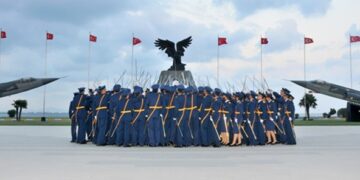


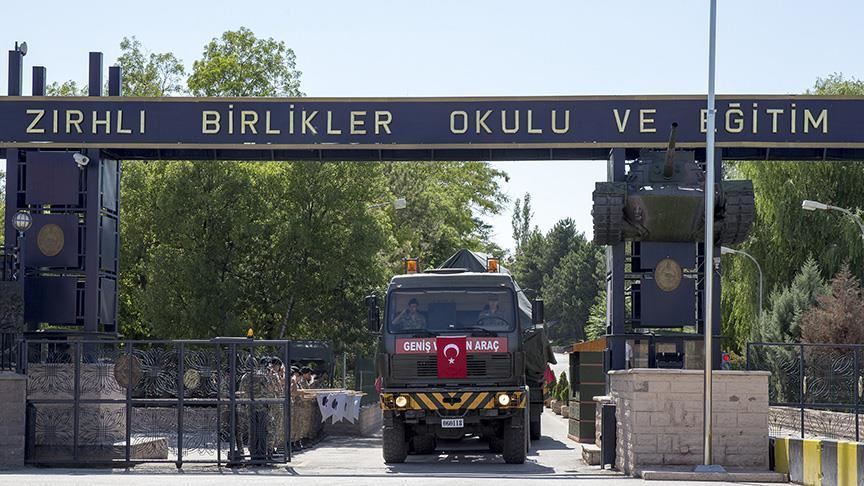
The 244-page indictment presents the Armored Units School in Ankara as a center of the July 15, 2016 coup attempt and accuses 52 military personnel of crimes carrying life sentences, including attempting to overthrow the constitutional order, parliament and the government.
Yet the document also exposes weaknesses in Ankara’s case. It acknowledges that many soldiers were called to the base after being told that terrorists had attacked military headquarters and killed personnel. Junior officers and enlisted soldiers were ordered to prepare armored vehicles under military discipline, with no clear evidence cited that each knew they were joining a coup.
Only two tanks left the base. Both turned back after encountering civilians, while other crews refused orders, personnel disabled several vehicles and soldiers opposed to the operation regained control of the compound. Despite this, prosecutors frequently convert presence at the base, compliance with orders, possession of weapons or membership in a WhatsApp group into evidence of coup intent.
The indictment devotes a large section to Ankara’s description of the Gülen movement before examining the defendants individually. This structure allows prosecutors to begin with an assumed organizational conspiracy and then fit each soldier into it, rather than first proving that every defendant knowingly and willingly participated in an attempt to seize power.
Read from outside Ankara’s official narrative, the document describes less a disciplined coup force than a base marked by deception, conflicting orders, refusal, confusion and internal resistance. It then uses collective guilt to bridge the gap between what senior officers allegedly planned and what many lower-ranking soldiers actually knew.