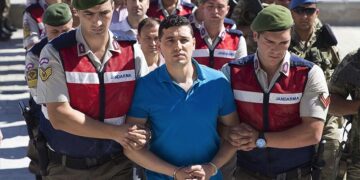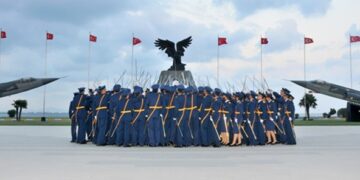



The Akıncı Air Base indictment presents the base outside Ankara as the command center of Turkey’s July 15, 2016 coup attempt and accuses 486 military personnel and civilians of participating in a single conspiracy.
Prosecutors accuse pilots of bombing parliament, police facilities and other targets, commanders of directing aircraft and civilians including Adil Öksüz and Kemal Batmaz of helping plan and oversee the operation.
But the prosecution extends evidence concerning the alleged planners and pilots to hundreds of people whose conduct varied.
Among the defendants were guards, technicians, trainees and personnel brought to the base under military orders. For some, the alleged act consisted of standing guard, restricting access to part of the base, responding to an alarm or following instructions from a superior.
The indictment often treats these actions as proof that the defendant knowingly joined the coup attempt. It repeatedly concludes that a person was a member of the Gülen movement after citing presence at the base, telephone connections, financial records and compliance with orders, without clearly showing when that person learned the operation was a coup.
The prosecution also begins with Ankara’s conclusion that the Gülen movement planned the coup and that Fethullah Gülen approved it. It then interprets travel, social relationships, religious affiliation and the presence of civilians near Akıncı as confirmation of that conclusion.
Direct participation by particular pilots and commanders becomes the basis for assuming shared intent among everyone assigned a role at the base.
The indictment also adopts the government’s contested account of then Chief of General Staff Hulusi Akar as a hostage and complainant. It does not treat conflicting testimony about Akar’s conduct, communications and departure from the base as grounds for reexamining that premise.
Read outside Ankara’s narrative, the document describes several separate categories that required different legal treatment: alleged planners, commanders accused of directing attacks, pilots accused of using weapons, personnel who knowingly supported the operation, soldiers deceived about their mission and people whose connection was limited to presence or routine duty.
By placing all 486 defendants inside one organizational account, the indictment uses the evidence against a narrow central group to fill gaps in the cases against many others. Akıncı’s role as the site from which aircraft operated becomes not only evidence of what happened there but a shortcut for proving the intent of nearly everyone present.