


The Alliance for Shared Values, a New York-based civil society organization affiliated with the faith-based Gülen movement civic networks in the United States, published a report in July 2017 arguing that President Recep Tayyip Erdoğan used Turkey’s July 15, 2016 coup attempt to consolidate power and justify a sweeping crackdown on opponents.
The report, originally titled Was July 15 Erdogan’s Reichstag Fire? and subtitled An Alternative to the Turkish Government Narrative, compared the coup attempt and its aftermath to the 1933 Reichstag Fire in Germany, which Adolf Hitler used to expand emergency powers and eliminate political opposition. A later revised AFSV version was retitled What Really Happened in Turkey on July 15, 2016?
AFSV describes itself as an umbrella nonprofit organization for civic, cultural and service organizations in the United States, with member organizations founded by participants in the Gülen movement, called by participants as the Hizmet (service) movement.
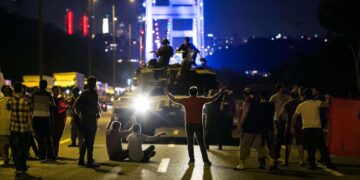
The report said Turkey experienced a “horrific” and unsuccessful coup attempt in which parliament was bombed and hundreds of soldiers and civilians were killed, but argued that the attempt appeared poorly planned, was quickly suppressed and was then used as a pretext for an unprecedented purge.
According to the report, the crackdown that followed led within a year to more than 50,000 arrests, nearly 140,000 dismissals, the arrest of hundreds of journalists and the closure of scores of media outlets by emergency decree.
The report challenged Ankara’s allegation that the coup attempt was orchestrated by Fethullah Gülen, saying the government had not produced credible evidence and pointing to skepticism among Western intelligence and diplomatic officials. It cited remarks by then-US Director of National Intelligence James Clapper, who said he had not seen intelligence supporting the claim, and by German intelligence chief Bruno Kahl, who said Turkey had failed to convince Germany that Gülen was behind the attempt.
Ankara blames the coup attempt on the Gülen movement, a transnational civic initiative inspired by Islamic scholar Fethullah Gülen, and designates the movement as a terrorist organization. The movement denies involvement in the coup or any terrorist activity.
The AFSV report argued that the speed of the purge, conflicting statements by Erdoğan about when he learned of the coup attempt and the failure to conduct a full independent investigation raised serious questions about Ankara’s official account.
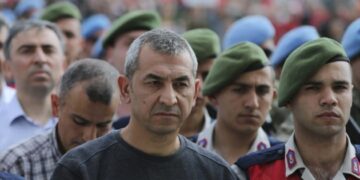
It also said the government’s response went far beyond alleged military participants, targeting civil servants, judges, prosecutors, academics, journalists, schools, charities, hospitals, associations and businesses linked or alleged to be linked to the Gülen movement.
The report did not claim to provide a final account of what happened. It said its purpose was to raise questions about the government narrative and present an alternative account that should be examined through an independent investigation.
A video released alongside the report also circulated widely on social media, according to 30ARTITV, which reported on the publication in July 2017.
The Reichstag Fire comparison was politically charged because it framed the coup attempt not only as a failed military intervention but also as a turning point used to transform the Turkish state.
In the report’s reading, July 15 became the basis for emergency rule, mass dismissals, prosecutions and institutional restructuring that strengthened Erdoğan’s control over the judiciary, bureaucracy, military and media.
AFSV later noted in a revised version that an earlier July 18, 2017 version under the Reichstag Fire title had included material from “inappropriate political sources” that was removed, and said it regretted the error.
The report remains part of the broader counter-narrative literature on Turkey’s 2016 coup attempt, focusing on unresolved questions, inconsistencies in official statements and the political consequences of the purge that followed.