

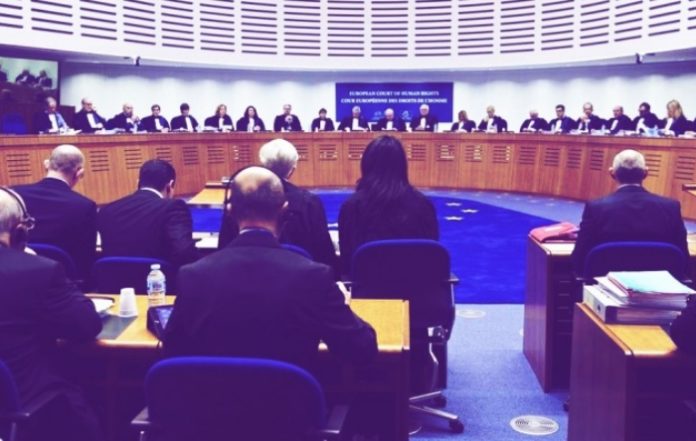
The European Court of Human Rights ruled that Turkey violated the rights of judge Hakan Baş, who was detained in the mass purge of the judiciary after Turkey’s July 15, 2016 coup attempt.
Baş, a judge in Kocaeli, was among 2,735 judges and prosecutors suspended by the Council of Judges and Prosecutors on July 16, 2016, one day after the coup attempt. He was placed in pretrial detention on July 20, 2016, on suspicion of membership in an organization Turkish authorities linked to the Gülen movement.
In its March 3, 2020 judgment in Baş v. Turkey, the Strasbourg court found violations of Article 5 of the European Convention on Human Rights, which protects the right to liberty and security.
The court ruled that Baş’s initial pretrial detention was unlawful and that there was no reasonable suspicion at the time of his detention that he had committed an offense.
It also found a violation of Article 5 § 4 because Baş did not appear in person before a judge reviewing his detention for approximately one year and two months.
The ruling is significant because it addressed one of the central legal devices used after the coup attempt to detain judges and prosecutors: the broad use of the concept of in flagrante delicto, or being caught in the act.
The court said Turkish courts had extended that concept in a way that was “manifestly unreasonable” and problematic for legal certainty, allowing judges suspected of organizational membership to be deprived of special procedural safeguards normally afforded to members of the judiciary.
The court also said the Kocaeli magistrate’s court relied mainly on the judicial council’s mass suspension decision and a prosecutor’s request for an investigation, without pointing to facts or individualized evidence concerning Baş personally.
The court noted that later references to alleged ByLock use could not justify his initial detention because that evidence was produced months afterward.
Baş denied membership in or links to the organization alleged by Turkish authorities. He was later convicted of membership in an armed terrorist organization and sentenced in March 2018 to seven years, six months in prison, with his release ordered in light of time already spent in detention.
Ankara blames the coup attempt on the Gülen movement, a transnational civic initiative inspired by Islamic scholar Fethullah Gülen, and designates the movement as a terrorist organization. The movement denies involvement in the coup or any terrorist activity.
The ECtHR ordered Turkey to pay Baş €6,000 in non-pecuniary damages and €4,000 for costs and expenses, for a total of €10,000.
The judgment was one of the early Strasbourg rulings examining the legality of Turkey’s post-coup detention of judges and prosecutors, many of whom were removed from office and detained through broad, collective measures rather than individualized evidence presented at the initial stage.