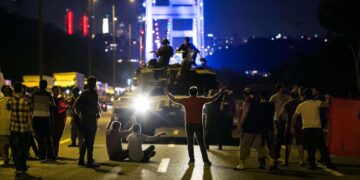



Turkish authorities confiscated nearly 5,000 passports at İstanbul’s Atatürk Airport in the year after Turkey’s July 15, 2016 coup attempt, amid sweeping travel restrictions imposed under the post-coup state of emergency.
According to figures reported in July 2017, border police at Atatürk Airport detained 132 people and confiscated 4,806 passports during entry and exit procedures.
Many citizens said their passports were seized without a clear legal explanation or a court order presented at the border.
The seizures were part of a broader system of post-coup travel restrictions that affected dismissed public servants, people under investigation, relatives of those targeted and citizens flagged in administrative databases.
After the coup attempt, the government canceled or blocked passports for large numbers of people accused of links to the Gülen movement or to institutions associated by Turkish authorities with the movement.
The Gülen movement is a transnational civic initiative inspired by Islamic scholar Fethullah Gülen.
Ankara blames the movement for the coup attempt and designates it as a terrorist organization. The movement denies involvement in the coup attempt or any terrorist activity.
The government also introduced additional document checks for people traveling abroad on green passports, issued to certain public servants and former officials, and gray passports, issued for official service travel.
Extra checks were also imposed on passengers using Turkish national ID cards to travel to Georgia and to the Turkish Republic of Northern Cyprus, a breakaway entity recognized only by Turkey.
The figures from Atatürk Airport showed how the post-coup crackdown extended beyond criminal prosecutions and dismissals to restrictions on freedom of movement.
For purge victims and rights advocates, the passport seizures became one of the most disruptive administrative measures of the state of emergency, leaving many citizens unable to leave Turkey even when they had not been convicted of any crime.
The airport controls also turned routine international travel into a point of legal uncertainty, with citizens discovering only at passport control that they had been barred from leaving the country.