

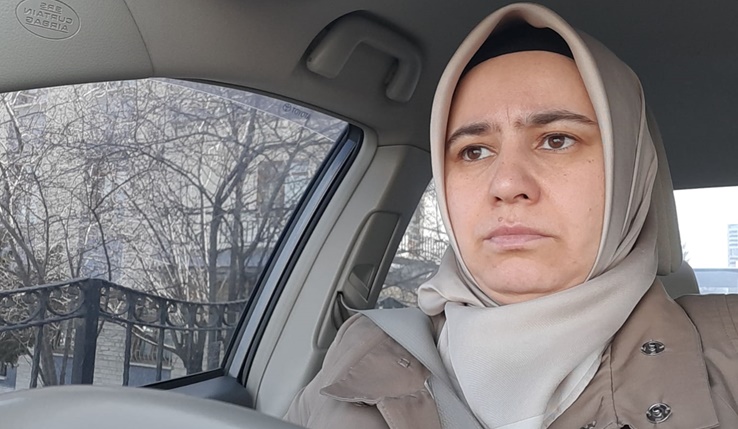
Melek Çetinkaya, the mother of jailed military cadet Furkan Çetinkaya, described the emotional toll of traveling 10 hours for a half-hour prison visit with her son, who has been held for 38 months over charges related to Turkey’s July 15, 2016 coup attempt.
Çetinkaya said her son and other 19-year-old cadets had been imprisoned for more than three years and that even small delays at the end of family visits could lead to disciplinary pressure.
“Last week, they asked our children for written defenses because they were late returning from the visiting area,” she said.
Çetinkaya said she asked her son what would happen.
“He said, ‘Nothing will happen, but if they issue a visitation ban, maybe you can get some rest,’” she recalled.
“I told him, ‘Don’t be ridiculous, you big goof. We travel 10 hours for a half-hour visit. So what if we lingered for five minutes?’”
Çetinkaya said she and another couple who married while in prison are usually the last to leave the visiting area.
“The other day he said to me, ‘Aunt Melek, we stay behind because we cannot bear to part, but what is your excuse?’” she said.
She described the final moments of the visit as the hardest.
“When the visit ends, we walk slowly,” Çetinkaya said. “Then I kiss my son’s hands and forehead.”
“I hold his hand tightly and do not let go. The guard yells, ‘Let go, come on.’ Just as he walks out the door, he turns back and makes a heart with his hands, and I blow him a kiss.”
“He is my pride and joy in both worlds, my dear son,” she said.
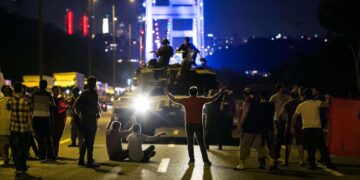
Furkan Çetinkaya was among the military cadets convicted in post-coup trials despite families’ insistence that the students did not know a coup attempt was underway and had acted under orders from their superiors.
The cadet cases have become one of the most disputed parts of Turkey’s post-coup trials, with families arguing that young military students were punished without adequate examination of intent, command responsibility or what they were told on the night of July 15.