

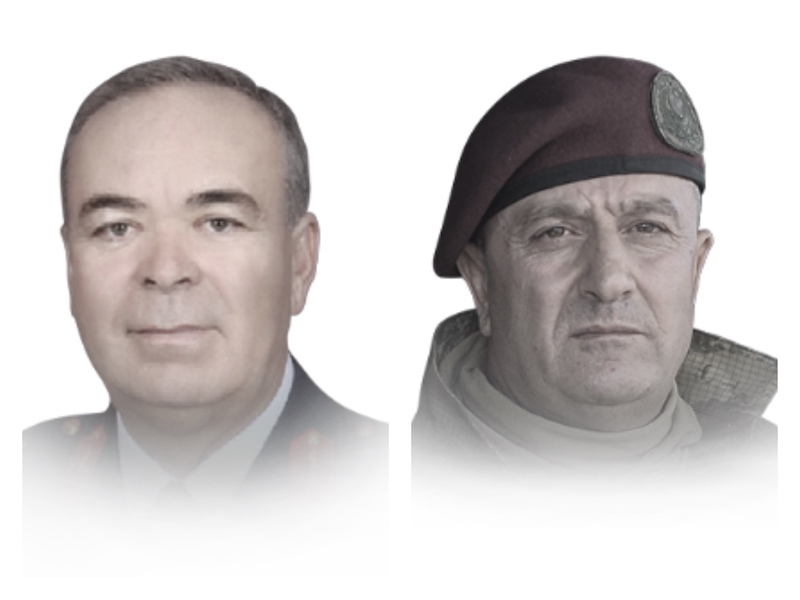
Journalist Ahmet Nesin has alleged that retired Special Forces commander Zekai Aksakallı and former Air Force commander Gen. Abidin Ünal, two senior officers central to the official account of Turkey’s July 15, 2016 coup attempt, had substantial Swiss bank accounts opened in their names, while also raising questions about their conduct before and after the attempted takeover.
Nesin made the claims in comments reported by Bold Medya and 15 Temmuz Gerçekleri, both of which said he had received new information about Aksakallı and Ünal more than five years after the coup attempt. The reports did not publish bank records, and the allegation could not be independently verified from the material cited.
Aksakallı was commander of Turkey’s Special Forces during the coup attempt and became one of the most prominent military figures in the government’s public narrative because of the order he is widely reported to have given to noncommissioned officer Ömer Halisdemir to shoot Brig. Gen. Semih Terzi at the Special Forces Command in Ankara.
Ünal, who was then commander of the Turkish Air Force, has also been a key figure in coup-attempt proceedings. The official account says he was among senior commanders taken hostage from a wedding at the Moda Maritime Club in İstanbul and later brought by helicopter to the military air base near Ankara that prosecutors described as a command center of the attempted takeover.
Nesin said Aksakallı and Ünal were already disputed figures in accounts of the night and claimed that the alleged Swiss bank accounts amounted to a reward for their role in what he described as a controlled or orchestrated coup scenario.
He also alleged that after leaving the Turkish Armed Forces, Aksakallı trained soldiers in Libya for SADAT, a private Turkish defense consultancy founded by Adnan Tanrıverdi, a former presidential aide to President Recep Tayyip Erdoğan. Turkish Minute reported in January 2021 that SADAT was established by Tanrıverdi and other retired military officers to provide defense consultancy and training.
Nesin further said Ünal had secretly met Erdoğan in Marmaris shortly before the coup attempt and had warned Air Force Academy commanders on the day of the attempted takeover not to tire the cadets too much.
The claim is significant because Air Force Academy cadets later became a major part of the coup-attempt prosecutions, while critics of the trials have argued that many lower-ranking soldiers and cadets were acting under orders and were not given individualized assessments of intent.
Aksakallı’s own post-coup career has also drawn attention. He was moved from the Special Forces Command to the 2nd Corps Command in 2017 and was retired under 2020 Supreme Military Council decisions, along with other generals, according to Turkish media reports at the time.
Nesin’s allegations do not establish that Aksakallı or Ünal received money, held Swiss accounts or acted improperly.
But they add to a wider set of questions raised by journalists, defendants and critics of the official account about why certain senior commanders were protected, promoted, reassigned or allowed to retire while thousands of lower-ranking officers, cadets and soldiers were jailed or dismissed.
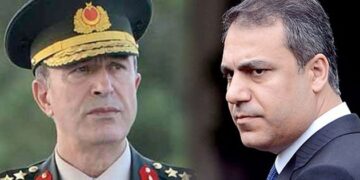
Nesin also claimed there was a risk of a new coup attempt, arguing that then-defense minister Hulusi Akar, who was chief of General Staff in 2016, and Interior Minister Süleyman Soylu were competing for power and that one of them could attempt to seize control.
That part of Nesin’s statement was speculative, and the reports did not provide evidence of an operational coup plan.
The broader significance of the remarks lies in the contrast between the government’s presentation of Aksakallı and Ünal as figures in the anti-coup narrative and the continuing allegations that their roles before, during and after the attempted takeover have not been adequately tested in public proceedings.
Ankara blames the coup attempt on the Gülen movement, a transnational civic initiative inspired by Islamic scholar Fethullah Gülen, and designates the movement as a terrorist organization. The movement denies involvement in the coup attempt or any terrorist activity.