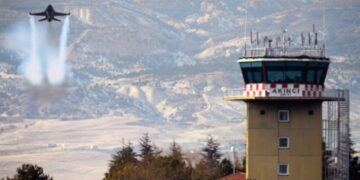


A former commander of Akıncı Air Base, the military facility near Ankara that prosecutors described as the command center of Turkey’s July 15, 2016 coup attempt, told a court that the navy commander’s own statement raised questions about whether senior officials knew in advance that an attempted takeover was coming.
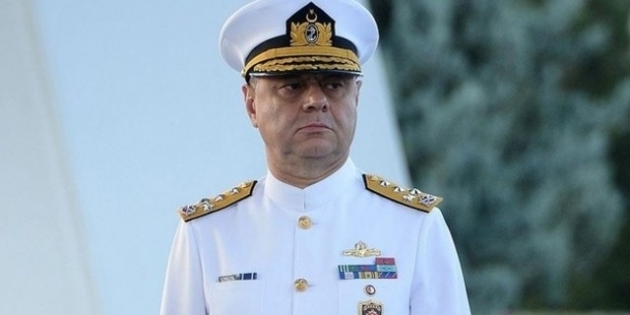
Brig. Gen. Hakan Evrim, a defendant in the main coup-attempt trial, cited the indictment statement of Adm. Bülent Bostanoğlu, then commander of the Turkish Naval Forces, during his defense before the Ankara 17th High Criminal Court.
Evrim said Bostanoğlu stated that he arrived at a hotel in İstanbul at around 7:30 p.m. on July 15 to attend a wedding and sent away his aide and official vehicle.
According to Evrim’s account of the statement, Bostanoğlu said he did so to avoid being neutralized by coup plotters and to give them the impression that his aide had not accompanied him to the wedding.
Evrim argued that this meant the navy commander knew as early as 7:30 p.m. that a coup attempt was expected.
He also said the indictment showed Bostanoğlu acknowledged that an attempt originally planned for 3 a.m. the following day had been moved forward.
“These statements are irrefutable proof that the coup was known about and not prevented,” Evrim told the court.
He asked the panel to summon Bostanoğlu to testify in person.
“The Naval Forces commander should be brought before the court and heard,” Evrim said.
The issue goes to one of the most disputed questions in Turkey’s coup-attempt trials: what senior commanders and intelligence officials knew before military activity began on the evening of July 15, when they learned it and why broader preventive measures were not taken.
Defendants have repeatedly questioned why the chief of General Staff, the intelligence chief and senior force commanders were not examined more directly in court about the chain of command and the state’s prior knowledge.
Evrim’s argument does not resolve whether Bostanoğlu had advance knowledge of the coup attempt or whether his actions that evening had another explanation.
But it places the navy commander’s timeline at the center of the defense’s claim that key parts of the official account should be tested in open court rather than accepted through written statements in the indictment.