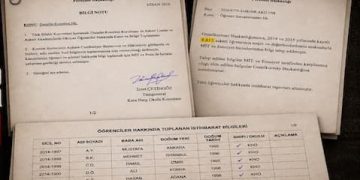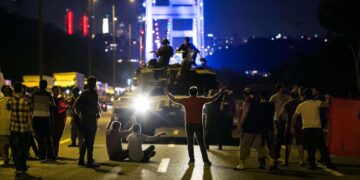



A Turkish naval officer has claimed that the unrest inside the Naval Forces Command during Turkey’s July 15, 2016 coup attempt was organized by officers who had previously been defendants in the Sledgehammer and Ergenekon trials, adding that an order for ships at the Gölcük naval base to return to port that night could have led to a deadly trap.
The officer, who was described as giving a detailed account of events inside the navy on the night of the coup attempt, said the people who directed the action at Naval Forces Command were not Gülen movement-linked officers, as Ankara alleges, but figures from earlier high-profile military cases.
“Those who organized the uprising at Naval Forces Command on the night of July 15 are defendants from the Sledgehammer and Ergenekon cases,” the officer said.
Sledgehammer and Ergenekon were politically charged trials involving secular-nationalist military officers and other figures accused in earlier years of plotting against the government. By 2016, Turkish prosecutors had begun examining those cases as alleged “plot” proceedings in which non-Gülenist officers were said to have been targeted through fabricated or manipulated evidence. Cumhuriyet reported in September 2016 that investigations into the Sledgehammer, Ergenekon and military espionage cases had been folded into the main coup-attempt investigation.
The officer’s claim challenges the prosecution theory in naval coup-attempt cases.
Ankara blames the coup attempt on the Gülen movement, a transnational civic initiative inspired by Islamic scholar Fethullah Gülen, and designates the movement as a terrorist organization. The movement denies involvement in the coup attempt or any terrorist activity.
The naval dimension of the coup attempt has been treated by prosecutors as a major part of the case. In January, Hürriyet Daily News reported that an Ankara indictment alleged 29 vessels at naval bases including Gölcük, Aksaz, Mersin, İstanbul, Karadeniz Ereğlisi and Foça had been mobilized at around 9 p.m. on July 15. The indictment said those vessels represented about 70 percent of the navy’s main ships.
The officer focused in particular on Gölcük, a major naval base and shipyard in northwestern Turkey.
He said ships at the Gölcük shipyard were ordered to return to port on the night of the coup attempt and described that order as a “massive trap.”
“If those ships had returned to port, they would have been blown up by fire from the shore,” the officer said.
“Don’t forget that each ship carries tons of ammunition and fuel,” he added.
The claim suggests that the order, if carried out, could have caused heavy casualties and destruction at the naval base.
The officer’s account adds to disputes over the command structure inside the navy during the coup attempt, including who issued orders to ships, why certain vessels were moved and whether some personnel were being maneuvered into positions that would later be used against them in court.
The allegation is also significant because it points away from the government’s Gülen-centered explanation and toward rival factions inside the military, including officers associated with earlier secular-nationalist cases.