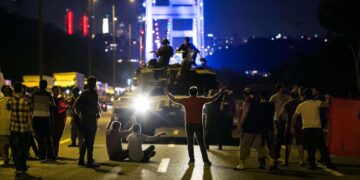


A former Turkish Military Academy cadet has recounted how he and hundreds of fellow cadets were caught in chaos on the night of Turkey’s July 15, 2016 coup attempt, later branded traitors and left to rebuild their lives after the country’s military schools were shut down.
The interview offers a first-person account from one of the military cadets whose lives were upended after the coup attempt. Military students, many of them teenagers or young adults, became one of the most controversial groups affected by the post-coup legal process, with some receiving aggravated life sentences despite insisting they had no knowledge of a coup plan.
Planned Çanakkale trip interrupted
Uysal said he was at the academy’s summer training program in İzmir’s Urla district when a group of cadets set out on a previously scheduled educational trip to the Gallipoli Peninsula to study the Çanakkale battles.
According to Uysal, the trip had been planned long before July 15 as part of the academy curriculum and was not an improvised movement on the day of the coup attempt.
He said about 450 cadets traveled in roughly 10 buses, accompanied by commanders. They left early in the morning, stopped at military facilities along the route and reached Çanakkale in the evening.
At first, Uysal said, nothing seemed unusual. The day passed normally, with planned visits and military instruction. But after dinner in Çanakkale, the cadets were suddenly ordered to assemble and return to their main camp in Menteş, near İzmir.
He said the order was unexpected because it disrupted a yearlong plan.
“There was clearly an extraordinary situation,” he said in substance, adding that the cadets did not initially understand what was happening.
Cadets hear of coup from bus radio
Uysal said personnel from the 2nd Army Corps Command in Gelibolu tried to stop the cadets from leaving. The cadets, he said, believed they had received an order from their own commanders and were trying to return to the unit they knew.
He described the atmosphere as chaotic, with one group of soldiers blocking them and their own commanders trying to move them out.
At around 9 p.m., while the cadets were on buses, Uysal said they heard from the bus radio that a coup was underway in Turkey.
He said they did not know who was on which side, whether the soldiers stopping them were trying to protect them or harm them or what their own status was in the unfolding events.
The buses later reached the ferry crossing, but ferry services had stopped. Uysal said the cadets could not cross and were forced to turn back toward the 2nd Army Corps Command.
By then, he said, civilians had taken to the streets. He feared that if people realized the buses were full of cadets, they could be attacked.
“If the public had known there were military students in those buses, they would have overturned them,” he said, adding that the anger in the streets made him fear they could be lynched.
Guns pointed at buses
When the buses returned to the military facility, Uysal said armed soldiers surrounded them.
He recalled seeing rifles pointed at the buses and said the sight caused panic inside.
“There was screaming and shouting in the bus,” he said, describing cadets trying to hide under the seats because they had no means of defending themselves.
Uysal said the soldiers did not open fire but kept the cadets under armed control. He said the cadets were kept on the buses through the night, with only one person at a time allowed to leave for water or the toilet.
They were not given food, he said.
The next day, he said, the cadets were placed in an area surrounded by crime-scene tape and armed soldiers. He described the conditions as humiliating and frightening, saying they were held in a small area on hot asphalt for more than 20 hours.
He said one cadet who leaned back against the cordon tape was struck on the head with a rifle butt by a soldier.
“We understood that we were in the wrong place, in the wrong way, at the wrong time,” Uysal said.
Governor’s office says cadets were heading to İstanbul
Uysal said the cadets’ phones were confiscated, leaving them unable to contact their families or learn what was happening across the country.
He said a statement issued by the Çanakkale Governor’s Office on July 16 falsely claimed that more than 400 cadets had traveled from İzmir to Çanakkale and were heading to İstanbul to take part in the coup attempt.
Uysal said a similar claim was later shared by official channels, leaving the cadets feeling that they had already been condemned.
“If the president of the country had called us terrorists and traitors and said we were going to stage a coup, then our fate had already been decided,” he said.
The cadets remained in Gelibolu for about a week before being returned to the Menteş camp in İzmir. Uysal said representatives from the Military Academy later had to explain that the students had been in the area for a planned Çanakkale trip.
Military schools closed
After returning to Menteş, Uysal said many of the officers responsible for the cadets, including company and platoon commanders, were arrested.
On July 31, 2016, Turkey closed its military schools by emergency decree. Uysal said that decision ended the academy careers of thousands of students across the Turkish Military Academy, Naval Academy and Air Force Academy.
He said the closure was especially devastating for fourth-year cadets who were only a month away from graduating as lieutenants.
Uysal said it was unprecedented in modern terms for the academy to be closed in this way and that even earlier crises involving military students had not produced such sweeping consequences.
He referred to the 1962 uprising led by Military Academy commander Talat Aydemir, saying cadets were punished then, but the school itself was not permanently destroyed.
After July 15, he said, Turkey began commissioning officers from civilian universities after short training periods, including six-month programs, to fill the military’s personnel gap.
Life after dismissal
Uysal said he was later allowed to continue his education at a civilian university and enrolled at Middle East Technical University (ODTÜ) in Ankara.
But he said life outside the military did not mean freedom. He described being branded a traitor by neighbors, acquaintances and the wider public after official statements and media reports portrayed cadets as coup participants.
He recalled returning home after the schools were closed and being confronted by a neighbor who had known him since childhood.
“You are a traitor,” he said the neighbor told him, adding that he could not stay there.
Uysal said such experiences pushed many former cadets into isolation. Some hid in their homes, some avoided public offices, banks and hospitals and others tried to leave the country.
He said he avoided official buildings out of fear that a simple identity check could lead to detention.
“I was in danger in two ways,” he said. “First, I was opposition-minded. Second, and more dangerous, I was a military student accused of staging a coup.”
Fear of arrest and departure from Turkey
Uysal said he eventually concluded that he could not build a life in Turkey. He said people close to him were being detained and that he feared his turn would come.
He described paying through intermediaries to learn whether there was an investigation or travel ban against him because he was afraid to make inquiries through official channels.
He said he later applied for a passport and a visa under intense fear, arranging for a friend to wait outside official buildings in a running car in case he needed to flee.
He eventually obtained a passport, secured a visa and moved to the United States, where he was living in the state of Georgia at the time of the interview.
Uysal said he could not see his family and did not know when he would return to Turkey. He said he did not view leaving as a rejection of his country, but as an attempt to survive and live freely.
“I can represent my country and my people anywhere in the world,” he said, adding that if the political climate changes one day, he would want to visit his family and the land where he was born.
Cadet rejects exam-rigging allegations
Asked about claims that military academy exams were manipulated, Uysal said he could speak only for the Turkish Military Academy and that such allegations did not match his experience.
He said the academy’s admissions process included physical tests, interviews and individual performance assessments, making large-scale hidden manipulation unlikely in his view.
He acknowledged that favoritism could exist in any institution but said the process he experienced did not resemble the sweeping claims later made against military students.
The interview ended with Uysal saying that the public had mostly heard only pro-government media portrayals of cadets as traitors and that accounts from the students themselves were rarely recorded.
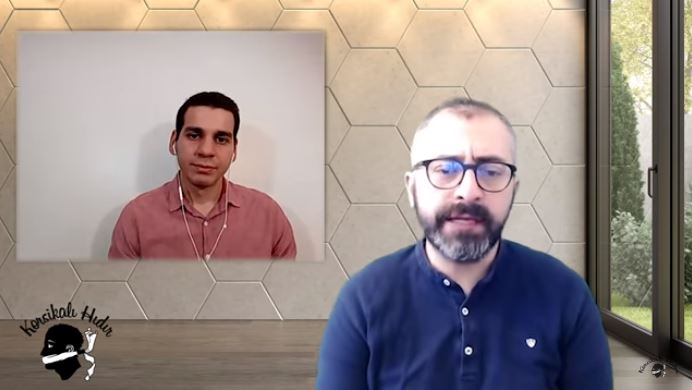
The video below presents Uysal’s full account of the planned Çanakkale trip, the night of July 15, the treatment of cadets in Gelibolu, the closure of military schools and his eventual departure from Turkey.