

Pro-government media outlets gave extensive coverage to the opening of a major trial over Turkey’s July 15, 2016 coup attempt but sharply reduced their reporting after defendants began alleging in court that they had been tortured, critics said.
The change raised questions about whether the Turkish public received a full account of testimony that challenged the government’s version of events.
The case, known as the General Staff headquarters trial, began at the Sincan prison complex in Ankara.
The defendants included former Air Force Commander Gen. Akın Öztürk, Lt. Col. Levent Türkkan, who served as aide-de-camp to then Chief of General Staff Gen. Hulusi Akar, and Ali Yazıcı, then aide-de-camp to President Recep Tayyip Erdoğan.
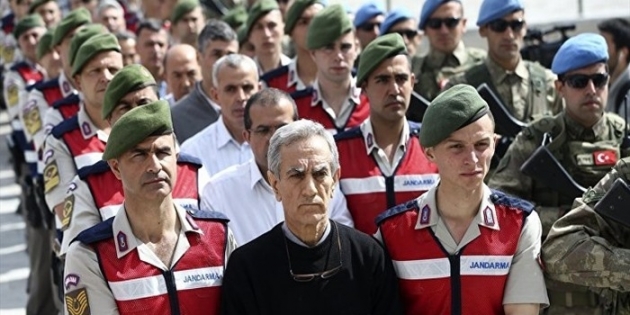
The trial opened under heavy security. Defendants, including generals and lieutenant colonels, were removed from prison transport vehicles while flanked by gendarmerie officers. Armed commandos stood nearby, snipers were positioned on rooftops and armored vehicles were deployed around the complex.
Officials said the measures were necessary for security. Critics said the defendants could have been taken directly to the courtroom instead of being dropped off about 500 meters away and made to walk in single file before television cameras.
Civilians were allowed inside the prison campus and brought close enough to shout at the defendants and throw nooses toward them. The state-run Anadolu news agency was allowed to place cameras at several locations and record the procession from different angles.
COVERAGE FADES AFTER FIRST DAY
Pro-government media outlets widely published images of the defendants arriving for the first day of the trial.
Coverage declined after identity checks and other procedural matters ended and the defendants began presenting their defenses.
Öztürk, Türkkan and Yazıcı alleged that previous statements had been obtained through torture and coercion. Some defendants also claimed that they had been drugged or forced to sign statements.
Pro-government outlets gave little prominence to those allegations.
By the following day, critics said, the trial had largely disappeared from the front pages of pro-government newspapers.
The decline in coverage came despite the scale of the crackdown launched after the coup attempt, which led to the dismissal of more than 150,000 people from public service and the arrest of nearly 60,000.
NEWS AGENCIES PROVIDE LITTLE COVERAGE OF DEFENSES
Critics said major news agencies also stopped providing detailed reports on the defense statements after defendants began describing alleged torture and coercion.
Anadolu, İhlas News Agency and Doğan News Agency, whose reports were used by many Turkish media outlets, provided little or no detailed coverage of the testimony, according to observers following the trial.
They said the lack of reporting prevented the public from reading the defendants’ statements in full.
Opposition newspapers including Sözcü and Cumhuriyet also did not publish the full testimony, apparently because of concern that they could be accused of supporting the defendants or people accused of links to the Gülen movement, which Ankara blames for the coup attempt.
The news website OdaTV, which had closely followed other coup trials, also reduced its coverage.
Critics said the lack of reporting showed the political sensitivity surrounding the case and the limited space in Turkey’s media for testimony that challenged the government’s account of the coup attempt.