


A series examining contradictions in pro-government columnist Abdülkadir Selvi’s account of Turkey’s July 15, 2016 coup attempt has raised questions about Major O.K., the officer who reportedly went to the National Intelligence Organization (MİT) hours before the coup attempt began.
The seventh part of the series focuses on whether Major O.K. merely reported a possible attack on then MİT Undersecretary Hakan Fidan, as later claimed in official accounts, or whether he reported a broader military operation. It also questions whether Major O.K. had previous contact with MİT before his report on July 15.
In the sixth part of the series, the writer noted that according to the official chronology, President Recep Tayyip Erdoğan learned about Major O.K. and his report at around 10 p.m. on the night of the coup attempt. The writer argued that Erdoğan and Fidan later avoided giving a full public account of what was reported to MİT earlier that day.
The central question is whether the only dispute regarding Major O.K. concerns the content of his warning, namely whether he reported only a planned attack on Fidan or a wider military operation.
The writer cites an article by Selvi titled “The major who reported the coup to MİT was dismissed,” published on August 4, 2016, as raising further questions.
In the article, Selvi relayed information he said he had obtained from Fidan and his team about the report of the major, whom he initially identified with different initials.
“Who Major H.A. was, when he came to the intelligence agency to report the coup and what he did after the failed coup attempt were among the most curious points. It is stated that H.A., who served as a pilot major at the Army Aviation Command, was one of the names occasionally in contact with the intelligence agency due to special forces operations and developments in Syria. Informed about his duty regarding the coup night on Friday afternoon, the pilot major went to the MİT headquarters in Yenimahalle at 2:45 p.m. and made a report,” Selvi wrote.
The writer argues that Selvi’s account showed from the beginning that Major O.K. had prior contact with MİT.
Selvi also referred to Major O.K.’s contact with the intelligence agency in his book, though with different wording.
“Major O.K. had contacts he occasionally worked with at the intelligence agency due to the coordination of operations against the Kurdistan Workers’ Party (PKK),” Selvi wrote, referring to the outlawed armed group that has waged an insurgency against the Turkish state since 1984.
In his August 4, 2016 article, Selvi said Major O.K. was “in contact with MİT.” On page 38 of his book, he wrote that O.K. “had contacts he occasionally worked with at the intelligence agency.”
However, on page 40 of the book, Selvi described the report’s delivery to Fidan in a way the writer says appears inconsistent with the claim that Major O.K. had prior contact with the agency.
“It was 4:05 p.m. on Friday, the day of the coup attempt. The chief of staff rushed into the room of MİT Undersecretary Hakan Fidan. ‘The branch manager has an urgent submission. He sent it to you so the undersecretary could see it,’ he said. Hakan Fidan had given instructions that in case of an emergency, even if there was a meeting, it should be interrupted, saying intelligence cannot wait. As he listened to what the branch manager recounted, the MİT undersecretary’s face grew tense. He understood they were facing a serious situation.
“Hakan Fidan asked two questions. The first was: ‘Is this man familiar? Is he a source?’
“‘No,’ they said.
“Upon this, Hakan Fidan asked the second question: ‘Is the man a soldier or not? Is he serving in Army Aviation as he claims, or not? Investigate this.’ The MİT undersecretary picked up the black phone, the secure line the state uses for communication, at exactly 4:20 p.m. and called Deputy Chief of General Staff Yaşar Güler.”
The writer argues that Selvi’s account creates an apparent contradiction: Major O.K. allegedly made a report at 2:45 p.m., but according to the book, the report was delivered to Fidan one hour and 20 minutes later, despite Fidan’s instruction that urgent intelligence should interrupt meetings.
The writer also questions why Fidan would ask whether Major O.K. was known to the agency if, as Selvi wrote elsewhere, O.K. had previous contact with MİT.
According to the writer, the fact that Major O.K. reportedly had prior contact with MİT also makes the testimony of Lt. Col. Deniz Aldemir, whom O.K. identified as being involved in the coup attempt, more noteworthy.
Aldemir denied willingly taking part in the coup attempt and said in his testimony about his exchanges with O.K. that he thought O.K. “wanted to drag me into something.”
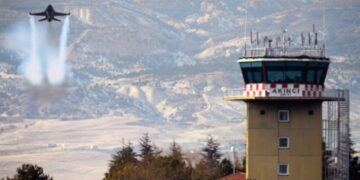
The writer also refers to Adil Öksüz, a civilian who was detained near Akıncı Air Base, which prosecutors described as the command center of the coup attempt, and then released. Öksüz later disappeared and became one of the most disputed figures in the post-coup investigations.
The writer notes that allegations that Öksüz had links to Turkish intelligence were not yet widely discussed when Selvi wrote that Major O.K. had prior contact with MİT. Those allegations, which Turkish officials deny, later remained a subject of public debate because of the circumstances of Öksüz’s release and disappearance.
On one hand, the writer says, Major O.K. stated in his own testimony that he had cut all ties with the movement led by Fethullah Gülen, which Ankara blames for the coup attempt, years earlier. On the other hand, according to Selvi’s account, O.K. had also been in contact with the intelligence agency for several years.
The writer argues that one possible reason Erdoğan and Fidan did not disclose more information about Major O.K. and his report was concern that his prior contact with MİT would become public.
The writer then asks whether it would be difficult for Fidan to prove that Major O.K. did not report a broader coup plan and had no previous relationship with MİT.
According to the writer, Selvi’s own book suggests that such proof may exist.
“It was 2:45 p.m. on Friday, the day of the coup attempt. Major O.K. was going to make a report about something he had been a part of for a while but later gave up on and wanted to inform the state about. Major O.K., whose statements were video-recorded, also handwrote a six-page whistleblowing letter. From that moment on, a rapid traffic of communication began between the intelligence agency and the General Staff,” Selvi wrote.
The writer says this means Major O.K.’s statement was recorded on video and that he also wrote a six-page letter.
According to the writer, the video recording and letter could help clarify what Major O.K. told MİT on July 15 and what the authorities knew before the coup attempt began.
The writer argues that if Major O.K. did not report a coup and had no prior intelligence relationship with MİT, there would be little reason for Fidan not to share the video recording and letter with the public, or at least with the parliamentary commission and prosecutors.
The writer also says the material could have been used as evidence in cases against people accused of links to the Gülen movement.
However, the writer argues, just as Erdoğan did not publicly explain when and how he learned about Major O.K.’s report on the day of the coup attempt, Fidan has not publicly disclosed the video recording or the handwritten letter.
The series concludes by criticizing pro-government media figures for not pressing Erdoğan and Fidan to explain why the records have not been made public.