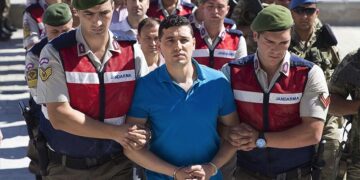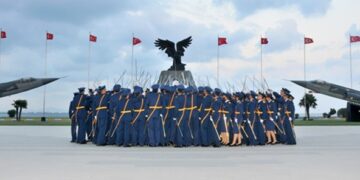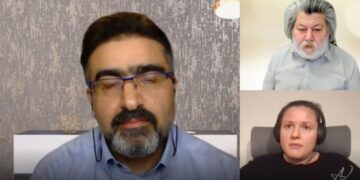



Court testimony challenging key elements of the Turkish government’s account of the 2016 coup attempt has prompted accusations that defendants are coordinating their statements from outside prison—and a reported search for clandestine radio transmissions around detention facilities.
The trial concerning events at General Staff headquarters began in Ankara on May 22 with 221 defendants, including former generals and other military personnel. Their defenses have raised disputes over who issued orders, what soldiers were told, the conduct of senior commanders and whether statements obtained during the investigation accurately reflected what defendants later said in court.
Former Air Force commander Akın Öztürk denied directing the coup attempt and said he had been unable to determine who organized it. Former Maj. Gen. Mehmet Dişli disputed Chief of General Staff Hulusi Akar’s account, saying he acted on Akar’s instructions during the night and later worked at the government crisis center at Çankaya Mansion.
Testimony in related proceedings has also challenged prosecution claims about the operation sent to Marmaris to capture President Recep Tayyip Erdoğan, events at the Special Forces Command and conversations involving commanders held at Akıncı Air Base. These statements have not resolved what happened, but they directly contest central parts of the narrative used to prosecute hundreds of defendants.
Government-aligned media responded by alleging that defendants were delivering “uniform defenses” under instructions from outside. No evidence of such coordination has been made public.
President Erdoğan intervened while the trials were still in progress, declaring that the defendants had been “caught red-handed” and accusing them of “playing the three monkeys” by denying knowledge or involvement. He said they would not escape the “painful end” awaiting them.
Those remarks effectively pronounced the defendants guilty before the courts had examined their defenses and reinforced concerns that the proceedings were taking place under direct political pressure.
Search for alleged prison transmissions
Cumhuriyet reported that the Justice Ministry asked the Prime Ministry to investigate whether electronic transmitters were being used to send instructions into prisons.
According to the report, radio-spectrum specialists searched for unauthorized frequencies around Ankara’s Sincan Prison and Istanbul’s Silivri Prison, where senior military officers were being held. The operation reportedly sought to identify a transmitter, trace its source and locate any receiver inside the prisons.
The report provided no evidence that an illicit transmission had been detected. It also did not explain what equipment prisoners were supposedly using to receive messages or how such a system could operate inside heavily monitored detention facilities.
The search therefore does not answer the contradictions raised in court. Those contradictions concern the actions of senior military and intelligence officials, the orders given to defendants and the reliability of statements obtained during the investigation. Alleging outside coordination cannot substitute for examining that testimony and the evidence supporting or contradicting it.