
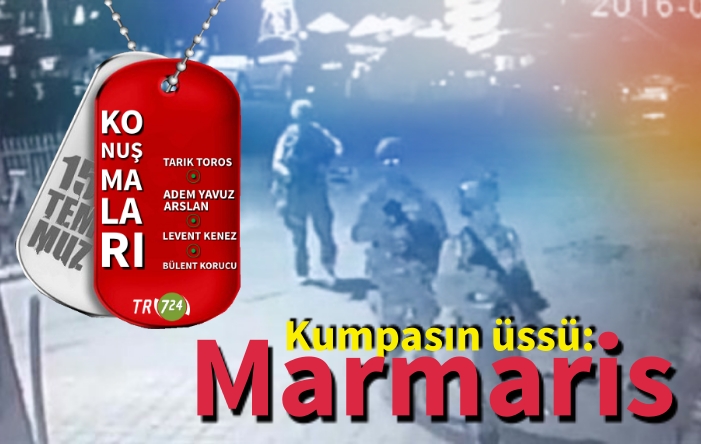
A TR724 panel broadcast on July 12, 2020, argued that Marmaris, where President Recep Tayyip Erdoğan was staying on the night of Turkey’s July 15, 2016 coup attempt, was central to what the speakers described as a staged or manipulated narrative built around an alleged assassination attempt.
The panel’s central argument was that official case files, witness statements and technical inconsistencies raise serious questions about whether the events in Marmaris reflected an actual attempt to kill Erdoğan or a controlled scenario designed to strengthen the official narrative of the coup attempt.
Ankara blames the coup attempt on the Gülen movement, a transnational civic initiative inspired by Islamic scholar Fethullah Gülen, and designates the movement as a terrorist organization. The movement denies involvement.
Akıncı Air Base records questioned
The program opened with Arslan’s discussion of Akıncı Air Base, which prosecutors described as the command center of the coup attempt. Arslan said the base’s camera records were selectively released, while much of the remaining footage was allegedly destroyed or withheld.
He said the most widely circulated footage showed former Air Force Commander Abidin Ünal walking at the base and former Air Force Commander Akın Öztürk accompanying him. But he argued that other potentially critical footage, especially from the 143rd Squadron and the officers’ club described in indictments as a command area, was not properly examined.
Arslan said prosecutors did not conduct a meaningful fingerprint examination in the places where alleged civilian coordinators were said to have been present. He also said camera footage from the base was destroyed on a prosecutor’s order and that the officer who carried out the destruction was identifiable.
The panel argued that if Akıncı was truly the headquarters of the coup attempt, the evidence should have been preserved in full and subjected to detailed forensic review.
Questions over aircraft and bombing claims
The panel also discussed flight records related to aircraft accused of bombing Ankara, including parliament and police facilities.
Arslan said one aircraft listed in the indictment as having bombed parliament was recorded in its flight data as not having flown on July 15. He said other aircraft allegedly involved in bombings returned with ammunition still on board, creating further contradictions.
Korucu added that some aircraft accused of bombing targets were, according to case records, on the ground at the relevant times. He also said 11 aircraft at Akıncı were not examined, despite claims that unidentified or non-base pilots may have been present there that night.
The panel argued that the absence of full aircraft inspections and reliable flight-data reconciliation left major gaps in the official account.
Deaths at Akıncı and allegations of execution-style shootings
Arslan also discussed civilian deaths near Akıncı, saying autopsy reports showed several people were shot in the back of the head or neck with single bullets.
He argued that such wounds did not fit the account of random fire from soldiers at the base and instead resembled execution-style shootings. He said prosecutors did not properly investigate how the civilians were killed or whether shots came from positions outside the base personnel’s control.
The speakers said the Akıncı investigation appeared designed to support a predetermined account rather than clarify what happened.
Marmaris described as ‘the base of the setup’
Kenez then turned to Marmaris, calling it the place that answers the question of whether July 15 was a coup against Erdoğan or what the panel described as an “Erdoğan coup.”
He said the Marmaris case was essential because the official claim of an assassination attempt gave emotional and political force to the broader coup narrative. If soldiers had truly come to kill Erdoğan, he said, critics of the official account would face a much harder argument. But he claimed the timeline itself undermined the allegation.
Kenez said Erdoğan had been staying at a villa connected to hotel owner Serkan Yazıcı after a chain of contacts that began around July 9, when Erdoğan returned from a North Atlantic Treaty Organization summit in Warsaw. He said Erdoğan’s security team inspected the site, placed additional cameras and prepared the area before his arrival.
According to Kenez, Erdoğan arrived in Marmaris before July 15 and remained out of public view for several days, receiving visitors and holding meetings away from cameras.
Timeline said to contradict assassination narrative
Kenez said the alleged assassination team did not arrive at the hotel until around 3:20 a.m., hours after Erdoğan had left the area.
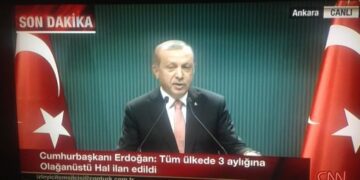
He said Erdoğan made his FaceTime appearance on CNN Türk shortly after midnight, left the hotel area around 12:30 a.m. and departed Dalaman Airport at about 1:43 a.m. The team accused of targeting him, he said, had been kept waiting for hours at Çiğli air base in İzmir and was allowed to depart only after Erdoğan was safely away.
Kenez argued that no serious coup planners would wait nearly six hours after the first public signs of military action to move against the head of state.
He also questioned Erdoğan’s later statement that he escaped by about 15 minutes, saying the documented timeline placed Erdoğan far from the hotel long before the soldiers arrived.
The panel said this delay was one of the strongest indications that the Marmaris episode was designed to produce the image of a failed assassination attempt without putting Erdoğan in real danger.
Claims of earlier helicopter activity
Kenez also discussed claims that other helicopters arrived in the Marmaris area before the alleged assassination team. He cited police statements and local accounts alleging that shots were fired before the accused soldiers landed.
He said police officer Necip Cengiz Eker was killed before the alleged assassination team arrived and that another officer, Çetin Şahan, had recorded details suggesting earlier gunfire from unidentified actors. According to Kenez, Şahan was killed three days later in circumstances he described as suspicious.
The panel said these accounts were not fully explored in the Marmaris trial.
Sözcü report said to have disrupted plan
The speakers also discussed a Sözcü newspaper report that revealed Erdoğan’s location before the coup attempt unfolded publicly.
Kenez said the report disrupted a carefully prepared plan because it disclosed details about where Erdoğan was staying. He said this was why the newspaper’s staff later faced intense legal and political pressure.
Arslan added that Erdoğan had also visited Okluk Bay shortly before July 15, with security measures that may have created the impression he was staying there. The panel suggested that this could have been part of a deliberate effort to create confusion over his location.
Missing hotel and radar records
The panel also said critical hotel camera footage from Marmaris was unavailable because investigators arrived only after the hotel’s automatic recording cycle had allegedly overwritten the relevant material.
Arslan said radar and flight records concerning helicopters and movements in the Marmaris area were also missing or withheld. He said flight records from Dalaman and Marmaris were absent, and that the alleged “three helicopters” narrative did not match all witness accounts.
He also said Brig. Gen. Gökhan Sönmezateş, who led the team sent to Marmaris, repeatedly asked for phone traffic records of his conversations with the General Staff but that those records were not provided.
The speakers argued that the missing technical records were among the strongest signs that the official narrative was incomplete.
Questions over Jandarma General Command deaths
The final part of the program focused on the Jandarma General Command headquarters in Ankara, where civilians and soldiers were killed during the night.
Korucu said court records and autopsy findings indicated that bullets recovered from some victims did not match the weapons of the soldiers convicted in the case. Arslan added that some bullets were armor-piercing rounds not found in the Turkish Armed Forces inventory.
The panel argued that courts did not seriously investigate who fired those shots.
The speakers also discussed the shooting of Turgut Aslan, then head of the police counterterrorism department, and the killing of his bodyguard. Korucu said camera footage showed Aslan being escorted through the building before the shooting, but that the actual moment was not captured or made available.
Arslan said the weapon allegedly used in the shooting, an MP5, later disappeared and was removed from inventory, raising further questions.
Panel says investigations avoided central questions
The panel concluded that the Akıncı, Marmaris and Jandarma files all showed a similar pattern: missing footage, unexamined weapons, absent flight records, unexplored witness accounts and courts unwilling to pursue evidence that might contradict the official account.
The speakers said later episodes would examine the Naval Forces Command, the killing of Special Forces commander Semih Terzi, the role of Ömer Halisdemir and key July 15 figures including Adil Öksüz, Ümit Dündar, Abidin Ünal, Şirin Ünal, Zekai Aksakallı and Hakan Fidan.
The video below presents the fourth episode of TR724’s July 15 Talks, focusing on Akıncı Air Base, Marmaris, flight records, missing evidence and unresolved deaths from the night of the coup attempt.