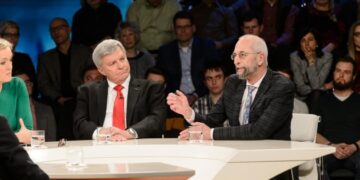


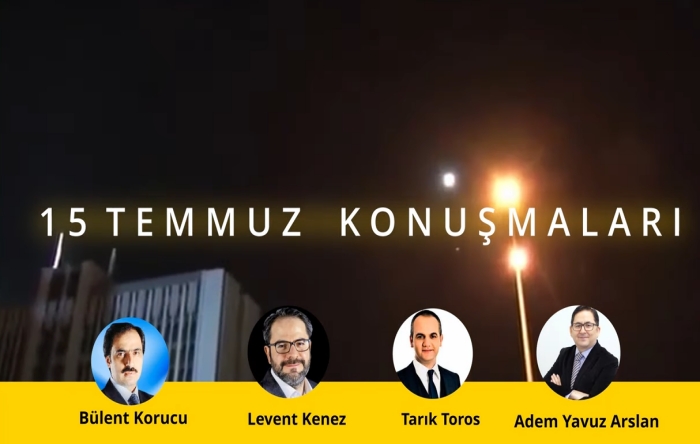
TR724 launched a special series on Turkey’s July 15, 2016 coup attempt with a panel arguing that the failed putsch cannot be understood as an isolated night of military action, but as the result of years of political engineering, intelligence activity, media manipulation and state preparation.
The participants questioned whether the events should be described as a coup attempt, a controlled attempt, a setup, a staged event, a “black comedy” or a state operation. They said the lack of transparent trials, inaccessible court proceedings and limited public scrutiny had helped preserve a fog around the issue.
Korucu said the word that first came to mind for him was “trap.” He argued that not only soldiers and military cadets but the whole country had fallen into a carefully prepared and deeply immoral trap.
Arslan described July 15 as “state terror,” saying the intelligence service, the General Staff and the presidential palace used state power against the public. Kenez compared the aftermath to the Reichstag fire, arguing that President Recep Tayyip Erdoğan used the event to consolidate power, purge opponents and build a one-man regime.
Toros said he viewed July 15 as a state-supervised rupture, one that marked perhaps the most consequential break in Turkey’s republican history.
Panel links July 15 to earlier state operations
The speakers placed July 15 within a longer Turkish history of political violence, military interventions and state-engineered crises, citing the September 6-7, 1955 anti-Greek pogroms, the Sivas massacre and past coup periods as examples of events preceded by preparation, propaganda or institutional positioning.
Arslan referred to the 2014 leaked Foreign Ministry meeting in which senior Turkish officials discussed possible military options related to Syria, saying the recording showed how state officials could speak about creating the conditions for intervention.
The panel argued that July 15 should be read through that tradition of psychological warfare, political engineering and the use of public fear to reshape politics.
Korucu said Erdoğan and the ruling Justice and Development Party (AKP) had long benefited politically from the language of coups and anti-coup struggle. He said previous political crises, including the April 27, 2007 military memorandum, helped Erdoğan expand his support by presenting himself as a victim of military tutelage.
He argued that the government later used the same language to portray any institutional resistance, court ruling or political challenge as a coup-like threat.
June-November 2015 period described as a rehearsal
Kenez said the period between the June 7, 2015 general election, when the AKP lost its parliamentary majority, and the November 1, 2015 snap election was crucial for understanding July 15.
He recalled that Erdoğan had campaigned on a demand for 400 lawmakers to enable a shift to a presidential system and said the public did not grant that authority in June.
Kenez said Turkey then entered a period of intense violence, with hundreds killed in clashes and terror attacks, including the Suruç bombing and the Ankara train station massacre, the deadliest terror attack in modern Turkish history.
He argued that fear and insecurity helped the AKP regain its parliamentary majority in November and that this period functioned as an early test of political mobilization through crisis.
The panel also discussed the replacement of Ahmet Davutoğlu by Binali Yıldırım as prime minister, saying the shift was part of a broader political restructuring before July 15.
Media and judiciary had to be neutralized, speakers say
The panel argued that for July 15 and its aftermath to proceed as they did, independent media, police reporters, prosecutors and judges capable of questioning the official narrative had to be removed or silenced beforehand.
Toros referred to the takeover and closure of critical media outlets, including the İpek Media Group and Zaman newspaper, saying independent journalism had been weakened before the coup attempt.
Kenez said police and courthouse reporters were also targeted after July 15 because they were the journalists most capable of exposing contradictions in investigations and court files.
The participants said the judiciary had been reshaped in advance, making it possible to detain judges, prosecutors and public officials quickly after the coup attempt.
Speakers say lists predated the coup attempt
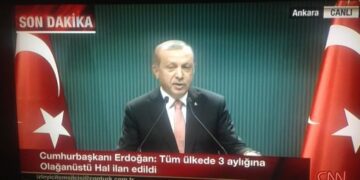
A central theme of the discussion was the claim that lists used in post-coup purges and the martial law directive announced on the night of July 15 overlapped with earlier profiling records, including mistakes.
Arslan said some people named in alleged coup documents were in the wrong posts, had been transferred, were abroad or were physically unable to participate, including officers who had been injured in a helicopter crash before July 15.
He said such errors showed that the lists were not created by putschists on the night of the coup attempt but were based on older profiling material.
The panel said this issue would be addressed in greater detail in later episodes, but argued that the inconsistencies already pointed to a preexisting plan.
Intelligence warnings before July 15
The program also discussed intelligence warnings sent shortly before the coup attempt. The speakers referred to reports that the National Intelligence Organization (MİT) sent warnings about expected terror attacks in the days before July 15, placing parts of the military on alert.
Arslan argued that this atmosphere of expectation mattered because personnel could interpret unusual orders as responses to a terror threat or a security emergency rather than as participation in a coup.
The panel also discussed the reintroduction of a version of the EMASYA protocol, a mechanism historically associated with military involvement in internal security, saying changes shortly before July 15 gave soldiers a framework for domestic deployment.
Kenez said soldiers were also given legal assurances similar to protections previously granted to intelligence personnel, creating a climate in which military action could be encouraged under the pretext of counterterrorism.
Questions over Erdoğan, MİT and General Staff
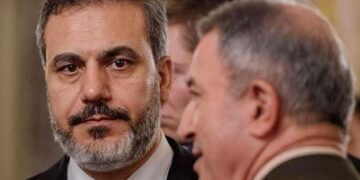
The speakers questioned Erdoğan’s claim that he first learned of the coup attempt from his brother-in-law. They also asked why MİT did not properly inform the president and why then-MİT chief Hakan Fidan remained in office despite the intelligence failure claimed by the government.
Korucu said in a normally functioning state, the failure of an intelligence service to inform the government of a coup attempt would require accountability. He noted that Fidan and then-Chief of General Staff Hulusi Akar did not testify openly in court but sent written statements to the parliamentary coup commission.
The panel said those statements themselves contained contradictions and that the refusal or inability of top officials to face direct questioning deepened suspicions around the official account.
AKP networks and local mobilization
The discussion also addressed claims that AKP organizations and local actors had advance awareness of events on July 15.
The speakers cited witness statements and examples of people allegedly traveling in advance to key locations, including İstanbul’s Bosporus Bridge, saying such accounts suggested that some civilians were prepared before the coup attempt became publicly known.
They also referred to claims that party networks, municipalities and other structures were ready for mobilization before the public announcement of the coup attempt.
Gülen movement framing questioned
The panel challenged the official framing that places the Gülen movement, a transnational civic initiative inspired by Islamic scholar Fethullah Gülen, at the center of the coup attempt.
Ankara designates the movement as a terrorist organization and blames it for July 15. The movement denies involvement.
The speakers argued that the question of whether the movement “carried out” the coup attempt obscures what they described as a larger state operation involving multiple actors, security institutions, political interests and nationalist-secularist networks.
They also referred to pre-coup media narratives claiming that the movement or military factions were preparing a coup, saying those narratives helped shape public expectations before the event.
First episode sets up later discussions
The panel said the first episode was intended as a preparatory discussion on the road to July 15. Later episodes were planned to examine the day itself, including the General Staff, MİT, Akıncı Air Base, Marmaris, Erdoğan’s flight, F-16s, Atatürk Airport, the bridges, the role of Semih Terzi and the killing of Ömer Halisdemir.
Toros said the goal of the series was to revisit July 15 with witnesses, journalists and court records four years after the coup attempt, at a time when many details remained obscured.
The video below presents the first episode of TR724’s July 15 Talks, focusing on the political, military, media and intelligence developments that preceded Turkey’s 2016 coup attempt.