

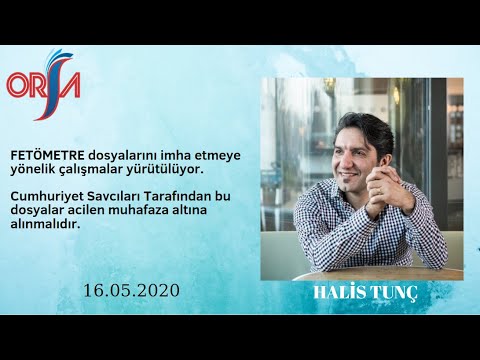
Former Navy Staff Col. Halis Tunç called on Turkish prosecutors to urgently secure records linked to FETÖMETRE, the controversial profiling system associated with Rear Adm. Cihat Yaycı, after Yaycı was reassigned from his post as chief of staff of the Naval Forces Command to the General Staff.
Yaycı is widely known in Turkey as the creator of FETÖMETRE, a set of profiling criteria used after Turkey’s July 15, 2016 coup attempt to identify people accused by the state of links to the Gülen movement, a transnational civic initiative inspired by Islamic scholar Fethullah Gülen.
Ankara designates the movement as a terrorist organization and blames it for the coup attempt. The movement denies involvement.
Tunç said media reports initially credited the system with the dismissal of about 16,000 officers, while the latest figures announced by the Ministry of National Defense put the number of personnel affected at about 25,000.
Three categories of evidence cited
Tunç said prosecutors should immediately secure three categories of records connected to FETÖMETRE and related investigations.
The first, he said, consisted of about 10,000 files allegedly created within the Naval Forces Command and kept in special safes.
The second category was what he described as FETÖMETRE “cards” containing scores assigned to military personnel under the system’s criteria.
The third was the Personnel Judicial-Administrative Control and Tracking System, known by its Turkish acronym PAİTU, which Tunç said contained profiling data on 800,000 Turkish citizens.
Tunç said these records were critical because many judicial proceedings had already ended or were nearing conclusion, while numerous dismissal cases were before Turkey’s State of Emergency Procedures Investigation Commission, which was created to review emergency decree dismissals after the failed coup.
Records could affect future appeals
According to Tunç, the commission frequently asked institutions for updated opinions on dismissed personnel, and those institutions often returned negative assessments based on FETÖMETRE criteria. As a result, he said, many people remained dismissed without meaningful review.
He argued that a new legal phase would begin in the coming years as dismissed personnel exhausted domestic remedies and took their cases to the European Court of Human Rights.
For that reason, Tunç said, the files, scorecards and PAİTU database could become central evidence in future proceedings.
He warned that if prosecutors did not take control of the records, they could be destroyed.
“There are reports that some efforts are underway to destroy them,” Tunç said, urging prosecutors to act before the material disappeared.
The video below presents Tunç’s urgent call for prosecutors to preserve FETÖMETRE files, scorecards and the PAİTU database after Yaycı’s reassignment.